Directive on active implantable medical devices correctly applied: These requirements result for your CE-compliant product
You can affix the CE mark and sign the declaration of conformity without worries.
THE EU DIRECTIVE 90/385/EEC ON ACTIVE IMPLANTABLE MEDICAL DEVICES
Willy Lebherz
Director & founder of easyCE GmbH

Declaration of conformity done!
Receive your CE declaration of conformity ready for signature.
Risk assessment completed!
CE mandatory risk analysis conducted.
Relevant directives & standards applied!
Your product evaluated against relevant directives and standards.
Technical documentation created!
Receive a pragmatic, user-friendly operating manual.
CE mark attached!
Simply affix the CE mark and you're done.
⚠️⚠️ This regulation is no longer valid ⚠️⚠️
Check out the new medical regulation!
CE marking routines differ depending on your role
CE AS PRODUCER
Until May 2021, active implantable medical devices (AIMDs) in the EU were regulated by directives such as Directive 90/385/EEC. These defined AIMDs as active medical devices that are fully or partially introduced into the human body and remain there for diagnostic or therapeutic purposes. Examples include pacemakers, artificial hips and breast implants. AIMDs belong to Class III of medical devices, which means that they are subject to the strictest regulations and permanent monitoring during their useful life. To obtain the CE marking, manufacturers must go through the process of classification, quality management systems, technical documentation, clinical evaluations and notified body testing. This process ends with the declaration of conformity for the product.
THE EU DIRECTIVE 90/385/EEC ON ACTIVE IMPLANTABLE MEDICAL DEVICES
The experts at easyCE will be happy to help you place your products on the market and assess special cases. We are happy to support you with CE, UKCA and other labelling.

FAQ
How were active implantable medical devices defined in the past within the European Union?
By May 2021, these three directives had regulated medical devices within the EU:
- Council Directive 90/385/EEC on active implantable medical devices (AIMDD) (1990)
- Council Directive 93/42/EEC on medical devices (MDD) (1993)
- Directive 98/79/EC of the European Parliament and of the Council on in vitro diagnostics (IVDMD)
How does the AIMDD 90/385/EEC define active implantable medical devices?
Any active medical device that is fully or partially inserted into the human body and remains there for diagnostic or therapeutic purposes is defined as an active implantable medical device (AIMD). Active implantable medical devices give patients a new quality of life and include a wide range of devices, such as:
- Implantable cardioverter defibrillators
- Artificial hips
- Pacemaker
- Breast implants
- Spinal screws, rods and artificial discs (spinal fusion hardware)
- IUDs (Intra-Uterine Devices)
- Metal screws, pins, plates and rods (traumatic fracture repair)
- Artificial knees
- Coronary stents
- Ear tubes (tympanostomy tubes)
- Artificial eye lenses
How does the EU classify AIMDs and medical devices?
There are four risk-based classes of medical devices under the European framework:
Class I: (low risk)
Class IIa: (medium risk)
Class IIb: (medium/higher risk)
Class III: (high risk)
AIMDs and their accessories are assigned to Class III and are therefore subject to the strictest regulations and permanent monitoring throughout their lifetime.
How does an AIMD get the CE marking?
The process of obtaining the CE marking for an implantable medical device requires the following steps, in which easyCE is happy to assist:
- Determination of the applicable EU Directive
- Classification of the device
- Implementation of a quality management system (mostly ISO 13485 for implantable medical devices)
- Compilation of a technical and a design dossier
- Applying of Clinical Evaluation Report (CER) to MEDDEV 2.7/1 rev4/MDD/MDR
- Appointment of a European representative acting on behalf of the manufacturer within the EU if the manufacturer is located outside Europe
- QMS and audit of technical and design dossiers by a notified body
- Approval of CE marking and ISO 13485 certificates issued by notified body
- Preparation of the declaration of conformity
What changes will the transition from AIMDD to the Medical Devices Regulation bring?
In general, the transition from the MDD/AIMDD to the new MDR regulation from 26 May 2021 requires some very significant adjustments to the technical documentation of a product:
- Include a Post Market Surveillance & Product Vigilance (PMS) plan and PSUR or PMS report as required in Annex III of the MDR
- Requirements for the scientific quality and comprehensibility of technical documentation are increasing, especially regarding clinical data
- Basic UDI DI is the primary identifier of the device model and key to records in the UDI database; used in relevant certificates and EU declarations of conformity
- Provision of an "implant card"; part of the marking; integration into technical documentation; allows identification of the product
- Information required to demonstrate compliance with GSPR
- Notified body may require that all information and documentation required to demonstrate the conformity of a product be presented in an EU official language easyCE will be happy to assist you in converting your dossier to the new Medical Device Regulation.
What should be considered in the technical documentation for class 3 medical devices?
The technical documentation must be a living document and cover, among other things, the areas of verification & validation, post market surveillance and traceability. The MDR lists the following subsets of the technical documentation:
- Audits of the notified body
- QMS
- Development process
- Production process
- Design History File (construction traceability)
- Device Master Record (production reference)
- Post-market data
- Continuous monitoring via electronic database
What does living document mean?
Technical documentation is a living document that must be created during the design and development process of a product and maintained throughout its life cycle.
It therefore covers the design, development, verification and validation of the product for clinical performance and the regulatory status of the product in the target markets. In addition, the MDR requires a closed process implemented with data from post-market monitoring of the product (PMS) to ensure early vigilance against hazards, so that the "To continuously meet General Safety and Performance Requirements (GSPRs) and ensure that benefits outweigh risks by implementing an appropriate risk management system.
How do I verify and validate technical documentation?
Development reviews as well as ongoing results of the design and development process, which verify the acceptance criteria at certain points in the process, create documented results.
It is important to ensure that the documentation generated during a design and development review is securely stored in the technical documentation in the form of either Design History File (DHF) or Device Master Record (DMR).
What is Post Market Surveillance?
Post-market data is the final, self-contained subset of documents included in the technical documentation as defined by the MDR. This may include competitor vigilance data, post-market clinical follow-up (PMCF) data,
user feedback and complaints. New inputs based on post-market data can initiate a new cycle in the design and development process. Design change controls can be implemented to introduce corrective and preventive measures that are essential for demonstrating continuous compliance with GSPRs.
What do I have to consider for the traceability of the technical documentation?
Proof of GSPRs requires that a clear structure is maintained throughout the technical documentation. Well-documented traceability procedures are required to ensure traceability from User Requirements Specification (URS), Functional Requirements Specification (FRS), risk analysis, clinical evaluation and general safety and maintain performance requirements and their reversal.
What does the technical documentation/DHFs of class 3 medical devices theoretically include according to MDR?
Annexes II and III to the MDR list the necessary elements of the technical documentation. These elements are: equipment description, manufacturer information, design and manufacturing requirements, general safety and performance requirements, risk management, product verification and validation, and any other specific additional information. This technical documentation shall meet the requirements for GSPRs as described in Annex I of the MDR.
What does the technical documentation/DHFs of class 3 medical devices include practically?
For practical purposes, the content of the DHFs may include the following documents:
- Construction plans
- Design review results according to the company's development protocol
- Design input requirements and specifications
- Traceability of the development process
- Draft of the output documents
- Information on component testing
- Information on material biocompatibility
- Verification results (other valuable verification and validation protocols)
- Validation results (identification, methods, data, people, etc.) for first finished devices
- Risk management activities
- Activities to the human factor
- Software verification and validation, if applicable
- Sterilization information, if applicable
- Packaging verification and validation, if applicable
In addition, useful DHF information includes (but is not limited to) the following:
- Sketches
- Design drawings
- Draft procedures
- Drafts of work instructions
- Drafts of forms
- Suitable photos
In addition to technical documentation, what are the requirements for AIMDs?
1. A person responsible for compliance: Article 15 of the MDR clearly states that medical device manufacturers are obliged to have at least one person within their organization or at their disposal having the necessary expertise in the field of medical devices. The responsible person must ensure that the technical documentation is prepared and maintained.
2. Designation of authorized representatives: In accordance with Article 11, "if the manufacturer of a product is not established in a Member State, the manufacturer shall designate a sole legal representative". The legal representative must provide, among other documents, a copy of the technical documentation and thus ensure effective communication in connection with the manufacturer's obligations to the BS.
3. Notified bodies for active implantable medical devices: The selection of a suitable Notified Body for an active implantable medical device is important. Notified bodies are responsible for ensuring the safety and conformity of all active implantable medical devices placed on the EU market.
4. A notified body may be selected from the full list of notified bodies of the European Commission. This is available on the NANDO website and currently contains 19 Notified Bodies, of which 6 are based in Germany.
5. Archiving periods for technical documentation: The technical documentation should be stored securely and protected from unauthorized access and modification. According to the AIMDD/MDR legislation, manufacturers are obliged to keep the technical documentation for implants available for BS for a period of at least 15 years after the last product has been placed on the market.
Is the directive on the restriction of hazardous substances applicable to AIMDs?
The RoHS Directive applies to medical devices with regard to substance restriction. Active implantable medical devices are currently outside the scope of the RoHS Directive, but are subject to future review by the EU Commission.
How long is a CE certificate valid for AIMDs?
Article 120(2) of the MDR states: "Certificates issued by notified bodies in accordance with Directive 90/385/EEC from 25 May 2017 shall remain valid until the end of the period indicated on the certificate, which may not exceed five years from its issuance. However, they are to become invalid no later than 27 May 2024.
What harmonized standards apply to active implantable medical devices?
The EU Official Journal contains harmonized standards such as:
- EN 556-2:2015,
- EN ISO 11137-1:2015,
- EN ISO 11137-2:2015
and in particular
- EN ISO 13485:2016 for medical devices - requirements for quality management systems.
What is the general CEN risk analysis procedure for medical devices?
The method of risk analysis for the investigation of the safety of a medical device as described in standard EN 1441 includes these steps, in which an easyCE expert is happy to support you:
- Determination of qualitative and quantitative product characteristics,
- Identification of possible hazards,
- Risk assessment for each hazard,
- Determination of the risk level and
- Implementation of risk mitigation procedures.
What do I need to adjust in the technical documentation to comply with the MDR?
Follow the checklist below to adapt the technical documentation to the new policy.
- Ensure that the general safety and performance requirements set out in Annex I of the MDR are met.
- Check that the technical documentation meets the new requirements and provides the necessary proof of conformity.
- Update the technical documentation according to the medical device classification concerned.
- For products already on the market, you create a well-founded clinical evaluation according to the requirements of the MDR.
- For new products, start collecting PMS data for the products as planned. Meddev 2.7.1 rev 4 can serve as a guide to the methodology of documentation of clinical data.
- The technical documentation shall be drawn up in accordance with Annexes II and III to the MDR.
- Implement all necessary markings according to UDI number on the medical device in accordance with Article 27 of the MDR.
- Identify a person responsible for compliance.
- Ensure the availability of technical documentation for the agent.
If questions remain unanswered, do not hesitate to receive an expert answer by contacting easyCE.
Hundreds of companies trust easyCE













With easyCE, product compliance is really 'easy'
Approach to CE marking
Type and manner of support
Scope of support
Contact during project processing

 Find the easiest way to obtain the CE mark
Abbreviated process for CE derived directly from CE
All-inclusive or modular – whatever you prefer
Personal contact with experts who take your wishes into account
other CE service providers
 Often lacking in sound judgement and unnecessarily complicated
Mostly flexible but often bureaucratic
Mostly flexible in terms of support scope
Mostly personal contact
CE Software
Follows standardised process; special circumstances not taken into account
Double burden for you: software management + no support during processing
Only according to software scope and purchased modules
No contact
You want support that lightens your workload and doesn't create more work.

This is what successful projects look like.
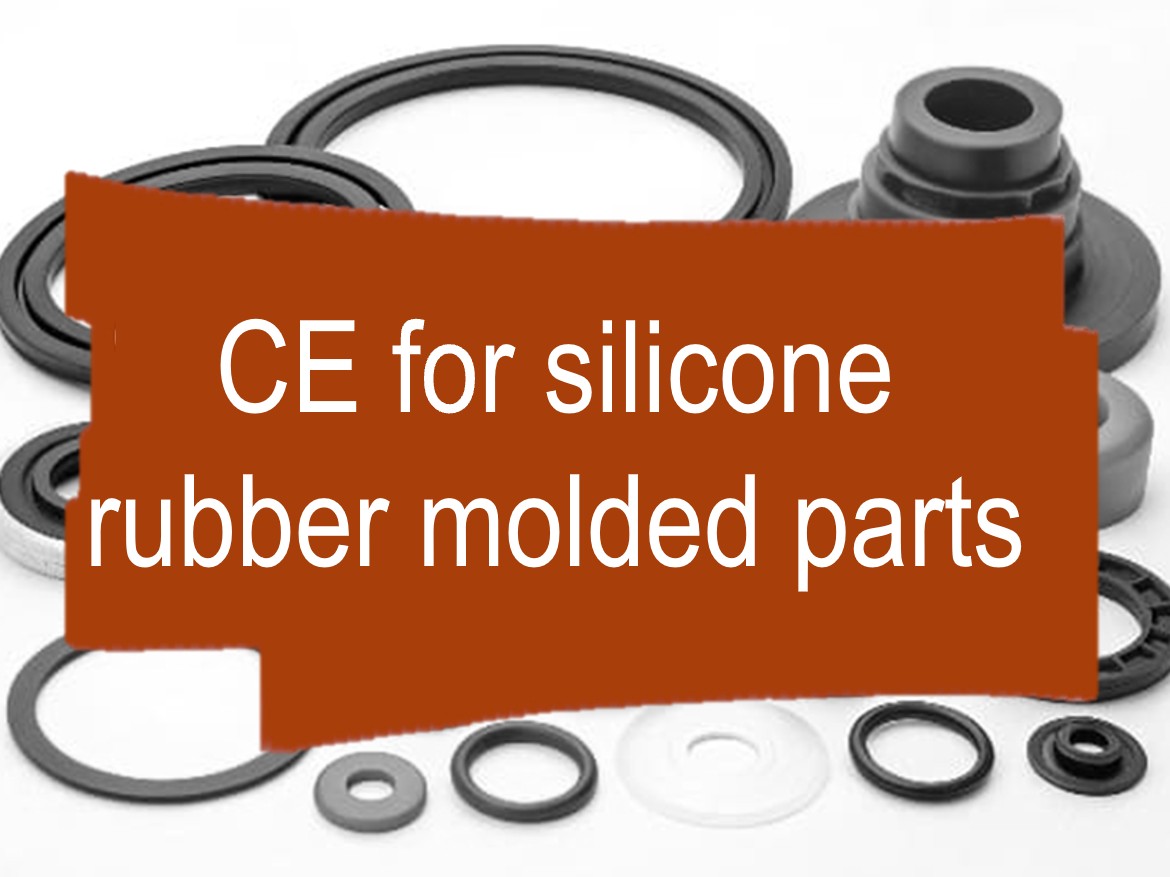
CE marking and Declaration of Conformity for silicone rubber molded parts in industrial applications
easyCE successfully supports CE marking up to the ready-to-sign Declaration of Conformity for elastic molded parts made of RTV silicone rubber. The special challenge with these products lies in meeting the fire safety requirements according to EN 13501-1 and ensuring chemical resistance according to EN ISO 10993-18. The various silicone types must undergo thorough testing for fire resistance, toxicity, and long-term stability, with particular attention to compliance with strict limits for volatile organic compounds (VOC) according to EN 16516.
Considering: Construction Products Regulation (EU) Nr 305/2011
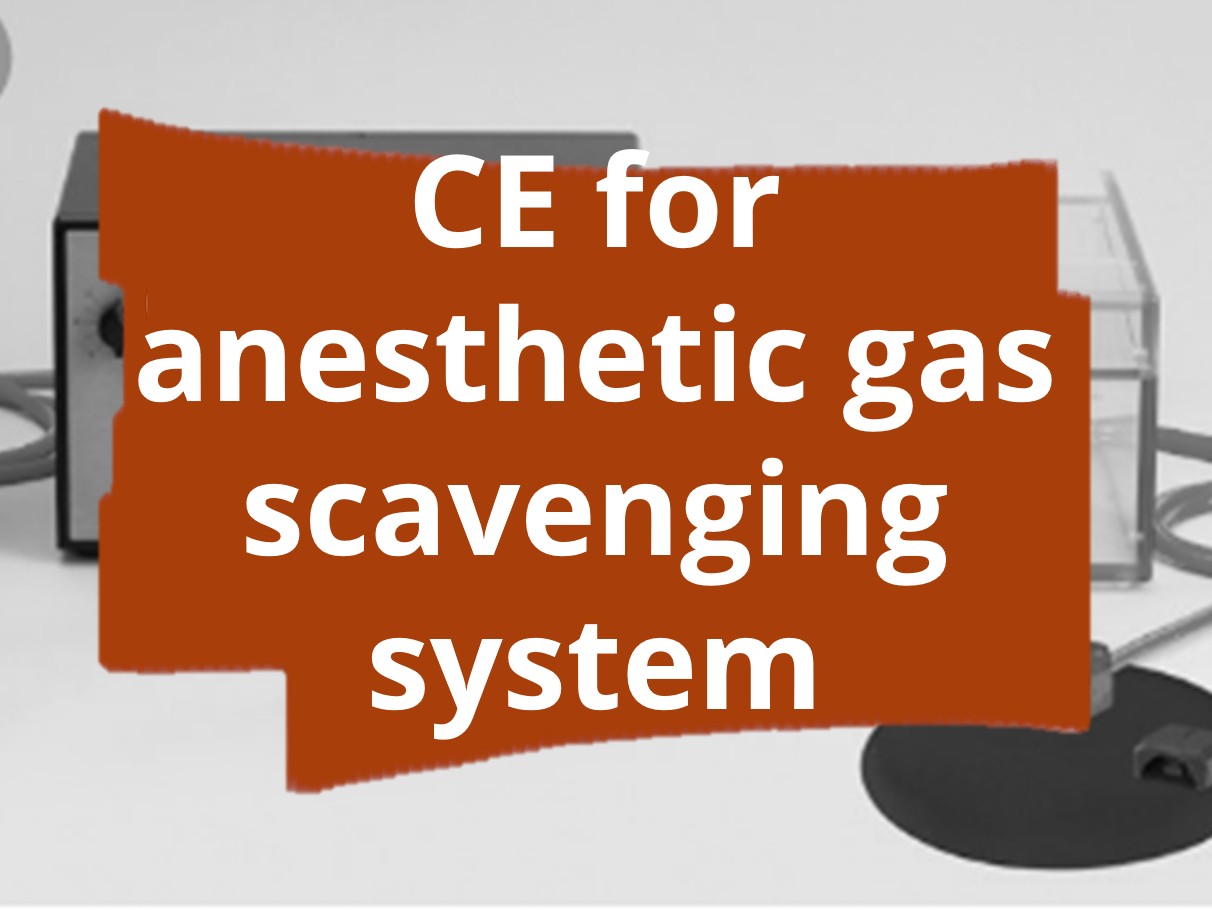
Conformity assessment procedure and CE marking for an anesthetic gas scavenging system in medical environments
easyCE successfully supports CE marking up to the ready-to-sign declaration of conformity for a system designed to scavenge anesthetic gases. According to EN ISO 80601-2-13, special safety requirements for anesthesia workstations had to be met. The challenge was validating flow rates for effective gas extraction while ensuring electrical safety according to EN 60601-1 for use in medical environments. Through precise validation measurements, the system's consistent performance was demonstrated.
Considering: 903/85/EEC
Conformity assessment, CE marking and instructions for use for a permeate treatment plant
easyCE supports the entire conformity assessment procedure, including the instructions for use for a system for permeate treatment, i.e. the treatment of water as a precursor to dialysis machines. In terms of design, it was important for the system to maintain and achieve a high degree of purity, which also had to be taken into account during the risk assessment.
Requirements research for dental implants
easyCE supports the research of a wide range of technical requirements for a dental implant. In particular, the technical properties with regard to the angle and inclination of the threads, but also materials such as titanium, were to be found out.
Support with the CE marking of horn eyeglass frames (Class I medical device) and sunglasses
In a challenging project, easyCE ensured the conformity of horn eyeglass frames as accessories to medical devices under the Medical Devices Regulation 2017/745 and of sunglasses under the PPE Regulation 2016/425. We extended the technical documentation to ensure that all required documents such as the risk management plan and the post-market surveillance plan are included.
Our team worked closely with the client to ensure all requirements of the Medical Device Regulation were met, including the general safety and performance requirements set out in Annex I. This included a thorough review of the design and manufacturing requirements to ensure the products met the highest standards.
CE marking for a lubricant according to the Medical Devices Directive
With the help of the Medical Device Directive 93/42/EEC, easyCE also finds the relevant requirements in the case of ambiguous definitions, informs the customer of their obligations and creates the necessary CE documentation around the existing quality management system. A risk management plan, checklists for technical documents, for hazard identification and safety-relevant features, for general safety and performance requirements according to MDR Annex I and a declaration of conformity are created product-specifically in German and English.
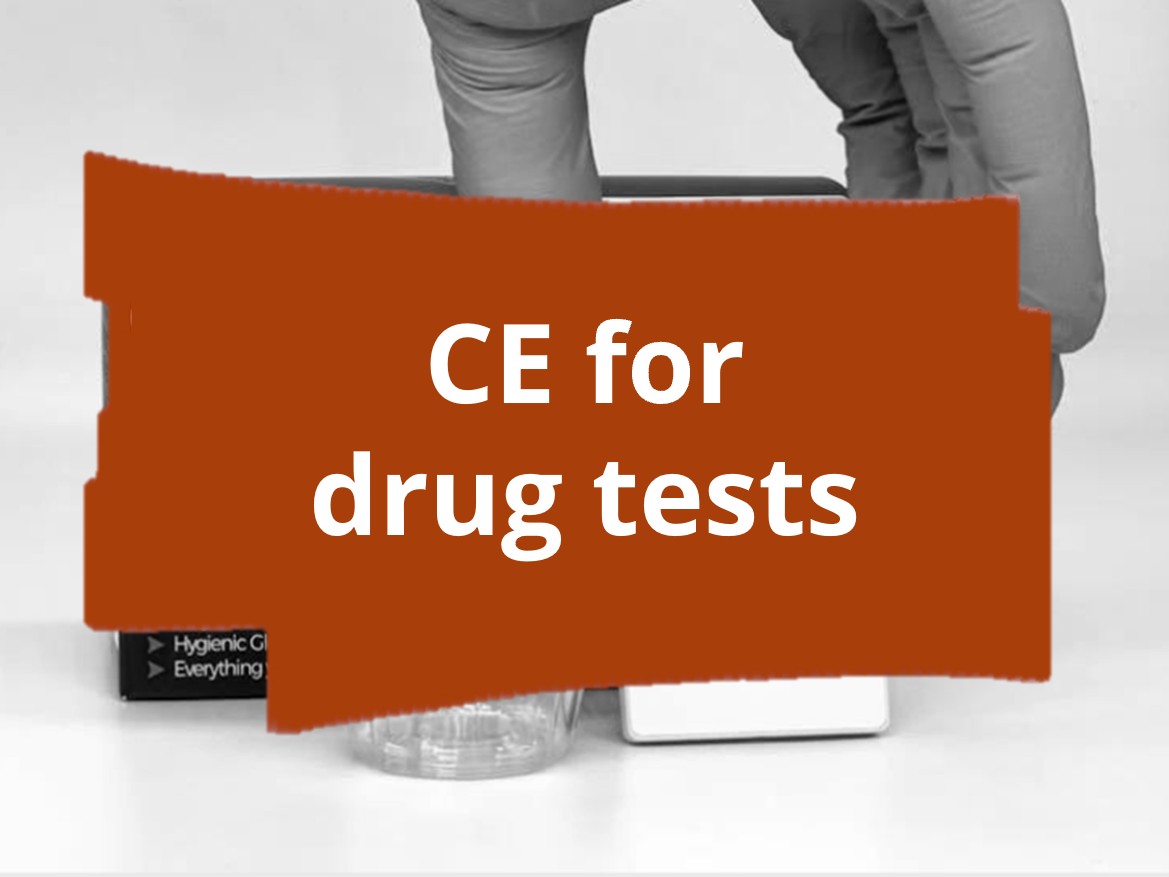
CE marking for drug tests
In this specific case of a multi-drug test, the decision on CE marking requirements depends on the user group. While a drug test for law enforcement purposes is exempt, a drug test for medical purposes falls under the new Medical Device Regulations (EU) 2017/745 and In Vitro Diagnostics (EU) 2017/746 as a Class C product. In this project, easyCE adapts the schedule to the customer in a particularly flexible manner, as unexpected problems arise during production. Even after completion of the commissioned project (Technical File, Hazard Identification, Identification of Safety-Related Characteristics, GSPR File, Risk Management Plan, Declaration of Conformity) and handover to the customer, design changes to the product occur. easyCE adapts the conformity documents and advises on necessary changes to the technical documents. Finally, easyCE contacts notified bodies on behalf of the customer and accompanies the customer during registration in EUDAMED to obtain SRN and basic UDI-DI.
Takes into account, among others: Regulation (EU) 2017/745; Regulation (EU) 2017/746
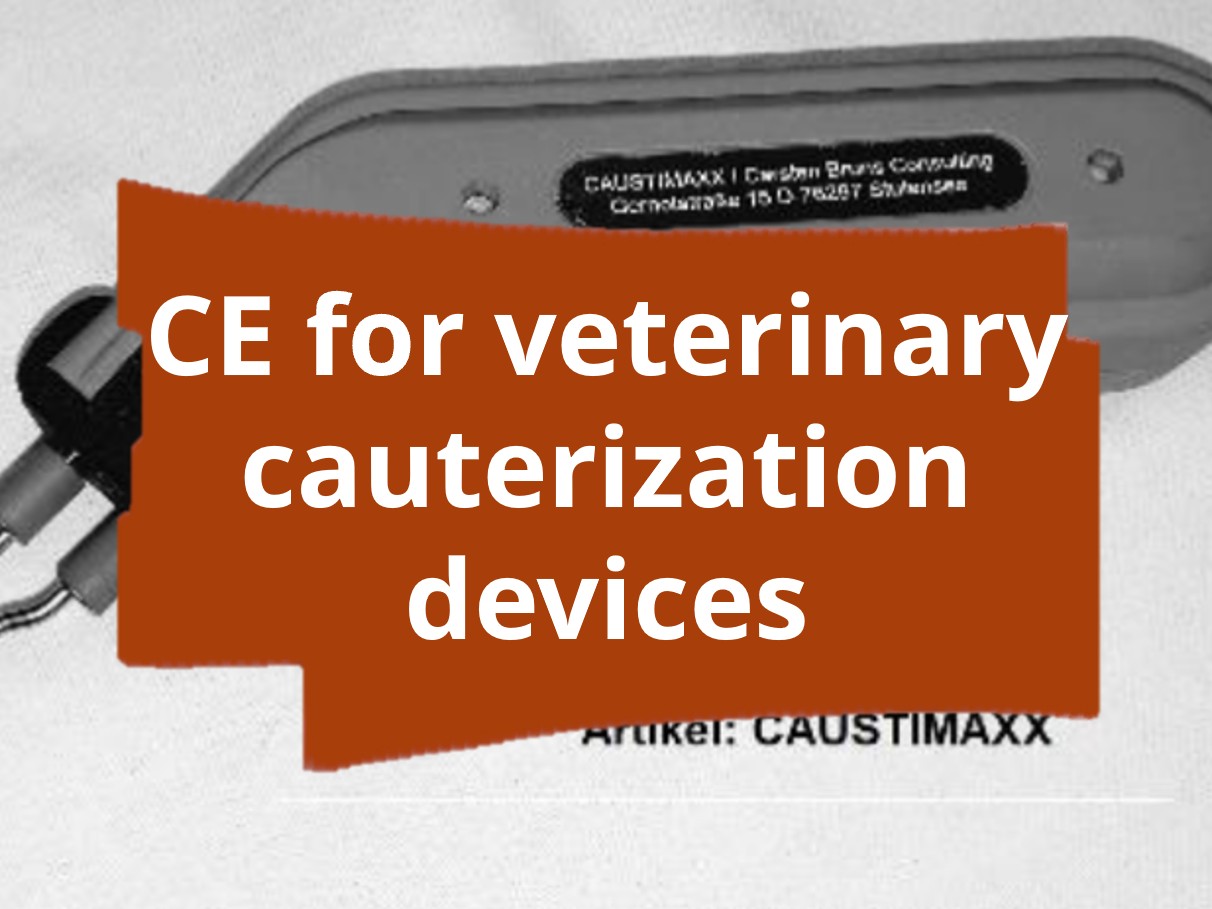
Conformity assessment procedure and CE marking for veterinary cauterization devices
easyCE successfully supports CE marking up to the ready-to-sign Declaration of Conformity for handheld cauterization devices. The implementation of requirements according to EN 60335-1 for electrical safety represents a central aspect. A particular challenge is compliance with electromagnetic compatibility according to the EMC Directive 2014/30/EU, which was solved through targeted measures such as shielding and interference suppression capacitors in accordance with EN 55014-1.
Considering: 2014/35/EU, 2014/30/EU, 2011/65/EU
See more reference projects
Get CE-marking done in 3 simple steps
Step 1
Request expert opinion
Ask for our expert opinion free of charge and find out what is necessary for the CE marking of your product. Be prepared to describe your product in broad terms.
Step 2
Receive our offer
If your product is subject to CE marking, we offer you our support with the CE marking and all accompanying measures. We will be happy to explain necessary steps on the phone.
Step 3
We get it done
When you place an order, you will be assigned your own personal CE expert who will carry out your CE marking and accompany you throughout the entire process. Your expert will also be at your side after the CE marking has been successfully completed.
Get CE-marking done, worry-free
Trust the experts of product safety and conformity

Willy Lebherz - Founder and Managing Director of easyCE
- Expert in product safety and conformity since 1995
- Recipient of the "Medal of the Order of Merit of the Federal Republic of Germany", awarded in 1983 by the then Federal President Carl Carstens
- Master of measurement and control technology
- Captain (ret.), Project Officer for Technical Logistics in the Army Material Office and Chief of the Telecommunications Repair Company
easyCE is a digital, dynamic engineering office with a focus on product safety and product conformity - especially CE-marking. We support manufacturers, operators and dealers in designing products safely and offering them on the market in compliance. We are a "full-service provider" and can take over the entire conformity assessment process for you if you wish. To do this, we support you in carrying out risk assessments, researching standards, product analyses, developing suitable safety precautions, preparing user-friendly technical documentation, coordinating tests and all other accompanying measures. easyCE was founded in southern Germany, but is now active globally.
We know what you need to do to get CE-marking done, worry-free.