FCC conformity assessment done right, this is how product conformity works in the United States.
You can affix the CE mark and sign the declaration of conformity without worries.
Willy Lebherz
Director & founder of easyCE GmbH


Declaration of conformity done!
Receive your CE declaration of conformity ready for signature.
Risk assessment completed!
CE mandatory risk analysis conducted.
Relevant directives & standards applied!
Your product evaluated against relevant directives and standards.
Technical documentation created!
Receive a pragmatic, user-friendly operating manual.
CE mark attached!
Simply affix the CE mark and you're done.
routines differ depending on your role CE marking
CE AS PRODUCER
The main focus of the FCC is on high-frequency devices that emit frequencies between 9 kHz and 3000 GHz. Any device that can emit high frequency energy by radiation, conduction or otherwise is considered a high frequency device. Examples are: Digital computer and (by radiation emission) Mixer with DC motors (by arcing on brushes) TVs (through digital circuits)
The experts at easyCE will be happy to help you place your products on the market and assess special cases. We are happy to support you with CE, UKCA and other labelling.
FAQ
What is Electromagnetic Compatibility (EMC)?
Electronic systems emit both conduction fields and device radiation. Directives and regulations on electromagnetic compatibility (EMC) are intended to prevent them from interfering with the electromagnetic environment.
In the USA, there are both statutory and self-imposed EMC requirements. The latter are often stricter than the former. The automotive industry, for example, is exempted from the FCC requirements, but its own regulations go far beyond the FCC regulations for digital devices.
What are the CISPR-22 standards?
The basic EMC requirements are similar in many countries. More and more nations, most of them in Europe, are accepting the international standards for EMC requirements, the so-called CISPR-22 standards. These standards were developed in 1985 by the CISPR (International Special Committee on Radio Interference).
What is FCC certification and where does it apply?
Due to the enormous market growth of computers and other digital devices, the Federal Communications Commission (FCC) set limits for electromagnetic interference in radio and wire communications.
Most electronic devices with a frequency of more than 9 kHz fall under this regulation. The Ordinance applies in all 50 states of the United States, the District of Columbia and other US territories.
For which products must FCC conformity be demonstrated?
The main focus of the FCC is on high-frequency devices that emit frequencies between 9 kHz and 3000 GHz. Any device that can emit high frequency energy by radiation, conduction or otherwise is considered a high frequency device. Examples are:
- Digital computer and (by radiation emission)
- Mixer with DC motors (by arcing on brushes)
- TVs (through digital circuits)
- Almost all other digital devices
What is an (un-)intended spotlight?
Intended radiators are devices that emit spark energy as part of their operation, such as smartphones. Unintended emitters are products that generate radio signals as an unintended by-product of their operation, such as a digital camera.
How does the FCC allocate digital devices?
The FCC names two classes for digital devices. Class A products are marketed for use in commercial, industrial or business environments, while Class B digital devices are marketed for use in private environments. The requirements for Class B products are stricter than for Class A products.
Which FCC class do PCs belong to?
Personal computers are considered a special category of Class B devices and are subject to stricter regulations than other digital devices. In particular, computer manufacturers must submit their test results to the FCC, while manufacturers of other digital devices of the same class certify their product themselves.
What is the difference between the FCC and CISPR 22 regulations?
The FCC and CISPR-22(-International-EMC) regulations for radiated emissions differ significantly in the regulated frequency range for conducted emissions. The scope of the CISPR-22 regulations starts at 150 kHz;
the FCC lower limit is 450 kHz; both scopes have the same upper limit. The emissions from switched-mode power supplies, which are becoming increasingly important, made the expansion necessary.
How does the FCC differ from the EMC Directive (for CE conformity)?
The EMC Directive of the European Union requires the testing of radiated immunity, conducted immunity and electrostatic discharge (ESD).
The FCC does not regulate these areas as they do not pose a threat to radio or wire communications. Many companies in the USA still design their products in such a way that they also function in the event of external interference.
What is radiation immunity?
Radiation immunity is the ability of products to operate in the environment of high-power transmitters such as AM and FM transmitters and airport surveillance radars.
What is conducted immunity?
Conducted immunity is the ability of a product to function despite a variety of interference coming into the device via the power cord. An extreme example of this disturbance is a surge of current caused by a lightning strike.
What is electrostatic discharge?
Electrostatic discharge occurs when static charge builds up on the human body or furniture and then discharges onto the product with which it comes into contact, causing a momentary surge of current. Such static voltages can cause resetting of devices or erasing of IC memories, etc.
Are there military EMC regulations?
EMC is particularly important for military applications, as military equipment must be immune to unwanted interference. Therefore, the military regulations are more stringent than the FCC or CISPR regulations and include a larger frequency range with multiple subdivisions. In addition, the EMC requirements of the FCC are not binding for certain military applications.
What does FCC compliance mean?
As part of the FCC approval process, the device is tested for its suitability before it is placed on the market. It is tested for interference with other devices and transmission in the correct radio frequency range. One of the three FCC modes of verification, declaration of conformity or certification is used to monitor compliance.
What is the FCC compliance check?
The verification shall be used for digital devices as defined in Part 15 which are not intended to emit radio frequency energy wirelessly by radiation or induction. These devices can be tested by the manufacturer himself and do not require formal FCC approval. Examples that require verification include TV and FM receivers.
What is the Declaration of Conformity (DoC) for FCC conformity?
In this stricter procedure than the verification, an accredited laboratory must test the high-frequency energy for the product to be placed on the market. A compliant product must bear the FCC logo on its label, and the FCC will receive the FCC's compliance data upon request. Examples of devices subject to DoC include class B personal computers and peri
What is FCC Compliance Certification?
The FCC certification is the strictest approval procedure in which the applicant must submit test data to the Commission. Only devices that can interfere with other devices and signals require this procedure.
Telecommunications certification bodies (TCBs) approved by the FCC issue the certificates for compliant products. The FCC ID must be indicated on the label of the product. Examples of devices subject to certification include ultra-broadband products.
How do I get FCC compliance?
FCC approval is required for electronic devices that have a frequency of over 9 kHz. The process of admission to the certification level includes the following five steps:
Step 1: Select the radio frequency
The manufacturer uses the current guidelines of the FCC for the assignment of radio frequencies and informs itself about legally released frequencies for the product to be developed and manufactured later.
Step 2: Pre-compliance testing during development
The manufacturer carries out as many internal tests as possible during development to avoid later surprises.
Step 3: Apply for a free FCC registration number (FRN)
The manufacturer registers with the FCC by providing his business address and contact information on the CORES (Commission's Registration System) page. In this way he receives an FRN and can apply for a mandatory Grantee code (nominal fees apply).
Step 4: Contact an FCC-registered verifier
After receiving the FRN and Grantee codes, it is time to contact an FCC-registered verifier.
Step 5: Perform compliance tests
The laboratory partner is provided with a prototype ready for series production and its technical specifications.
Step 6: Certification and submission
Finally, the test documentation is checked by TCB, which leads to the granting of the certification on behalf of the FCC. The FCC adds the product to its approval list after receiving the TCB's compliant data from the FCC database. Subsequently, TCB sends the manufacturer a "Grant of Equipment Authorization", which serves as final approval for the legal marketing and sale of the product in the USA.
Which activities are not regulated by the FCC? For which products does FCC compliance not have to be proven?
The FCC does not regulate the following points:
- information provided via the Internet
- Closed loop systems
- Radio or TV stations such as ABC, NBC, CBS and Fox, which only licenses individual stations.
In addition, the FCC has no authority to grant licenses for activities such as bullfighting, exhibitions, price wars and sports, etc.
After all, the FCC is also not authorised to regulate:
- Radios and TVs for the public
- Music licensing organizations
- Organizations that collect or publish messages
- Record labels
- Production of films for commercial or recreational purposes
How long does FCC approval take?
The FCC certification process can be time-consuming. Therefore, the FCC has authorized several private organizations, so-called TCBs (Telecommunications Certification Body), to issue and facilitate certifications. A TCB can help achieve accelerated FCC certification, probably within 2 weeks.
How does FCC compliance differ from UL compliance?
UL stands for Underwriters Laboratories. It is a private organization that has been setting standards for different product categories and testing products for more than 100 years.
A UL-approved product meets a nationally recognized safety standard, and UL certification is not required by law. However, it is a common practice as many large companies require UL safety testing from their suppliers.
Unlike UL, FCC is a legal requirement that means the product meets the standards of the Federal Communications Commission of the United States.
Hundreds of companies trust easyCE














With easyCE, product compliance is really 'easy'
Approach to CE marking
Type and manner of support
Scope of support
Contact during project processing

 Find the easiest way to obtain the CE mark
Abbreviated process for CE derived directly from CE
All-inclusive or modular – whatever you prefer
Personal contact with experts who take your wishes into account
other CE service providers
 Often lacking in sound judgement and unnecessarily complicated
Mostly flexible but often bureaucratic
Mostly flexible in terms of support scope
Mostly personal contact
CE Software
Follows standardised process; special circumstances not taken into account
Double burden for you: software management + no support during processing
Only according to software scope and purchased modules
No contact
You want support that lightens your workload and doesn't create more work.

Reference Projects
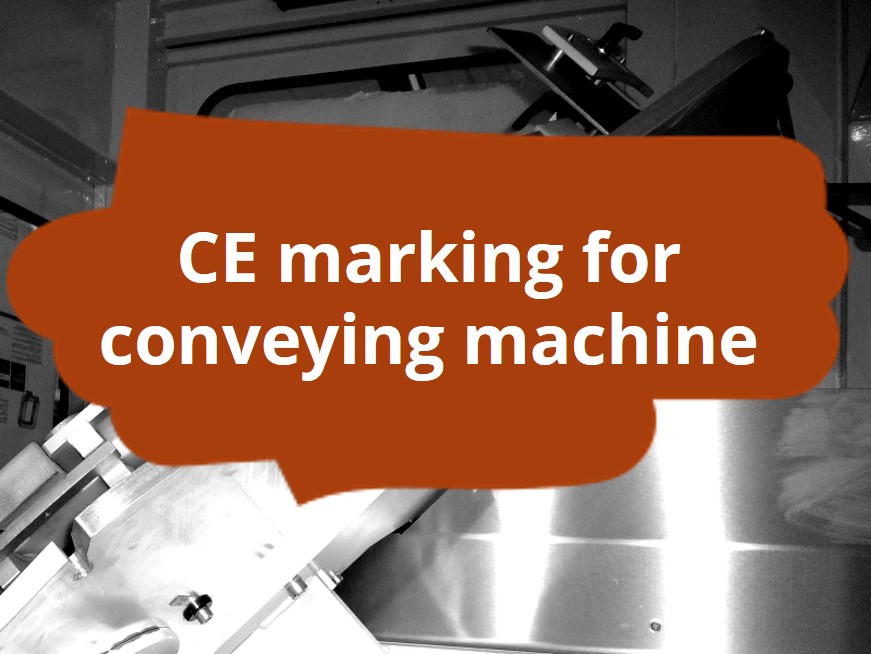
CE marking of laboratory machines developed in-house
In the course of an upcoming ISO 45001 occupational health and safety audit, easyCE supported a laboratory technology manufacturer in ensuring CE conformity for its internally used validation machines for medical equipment. Our specialists conducted a comprehensive assessment of occupational health and safety aspects and integrated these into the CE documentation. Particular attention was paid to safe operation by laboratory staff and the documentation of risk assessments that meet both CE and ISO 45001 requirements.
Takes into account, among others: 2006/42/EU, 2014/35/EU, 2014/30/EU, 2011/65/EU EN ISO 12100, EN 60204-1
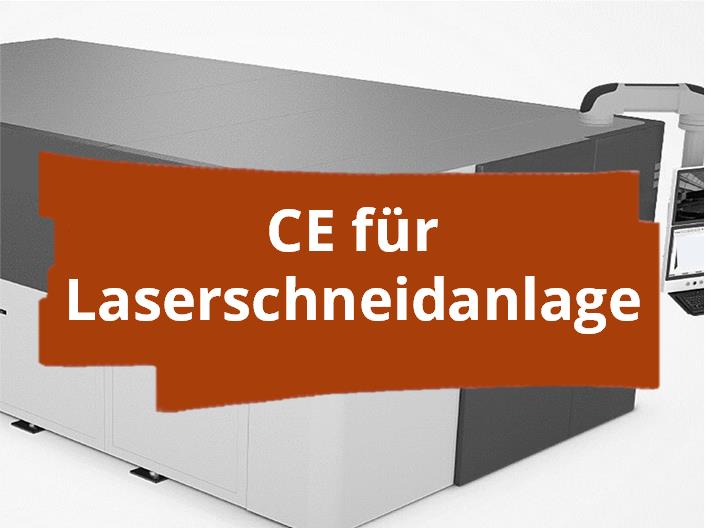
CE marking for a laboratory robot
In the course of an upcoming ISO 45001 occupational health and safety audit, easyCE supported a medical technology manufacturer in achieving CE conformity for its coagulation robot—a specialized laboratory machine for the automated performance of coagulation cycles for testing purposes. Our specialists conducted a comprehensive assessment of occupational health and safety aspects and integrated these into the CE documentation. Particular attention was paid to the safe handling of electrosurgical components and the documentation of risk assessments that meet both CE and ISO 45001 requirements.
Takes into account, among others: 2006/42/EU, 2014/35/EU, 2014/30/EU, 2011/65/EU, EN ISO 12100, EN 60204-1, etc.

CE marking and consulting for laboratory equipment
In the context of an upcoming ISO 45001 certification, easyCE supported a medical technology manufacturer with the CE documentation for a specialized testing and calibration machine for insufflators in the laboratory sector. Our specialists developed integrated documentation that covers both the CE requirements and the occupational health and safety aspects according to ISO 45001. Particular attention was paid to the safety requirements for handling various hose systems and connections, which can vary depending on the insufflator model.
Takes into account, among others: 2006/42/EU, 2014/35/EU, 2014/30/EU, 2011/65/EU, EN ISO 12100, EN 60204-1 etc.
CE marking for electrical equipment in medical laboratories
As part of the ISO 45001 certification preparation process, easyCE supported a manufacturer of electrical laboratory equipment in the correct classification and CE conformity of its products. Our experts carried out a precise analysis to distinguish between medical devices and electrical equipment in order to ensure correct classification in terms of occupational health and safety. This clarity was crucial for the ISO 45001 requirements regarding hazard identification and risk assessment in the workplace. Successful documentation and conformity assessment enabled the customer to operate its laboratory equipment in full compliance with occupational health and safety guidelines and to pass the ISO audit without any objections.
Takes into account, among others: EN 55032, EN 55035, EN 60335-1 etc.

CE marking for test station for low-pressure units
In the run-up to an ISO 45001 occupational health and safety audit, easyCE supported an industrial company in compiling CE documentation for an internal test bench for low-pressure units in accordance with occupational health and safety regulations. Our experts first analyzed the regulatory classification of the test bench and were able to prove through precise measurements that the Pressure Equipment Directive was not applicable. This clarification was crucial for the correct risk assessment within the framework of the ISO 45001 management system. The CE documentation subsequently created took particular account of occupational health and safety aspects such as operational safety and emergency procedures. This enabled the customer not only to demonstrate CE conformity, but also to pass its ISO 45001 certification without any deviations in the area of work equipment.
Takes into account, among others: 2006/42/EG, EN ISO 12100, EN 60204-1, EN ISO 4414, EN ISO 13849-1 etc.
Learn more about our project references and success stories
Get CE-marking done in 3 simple steps
Step 1
Request expert opinion
Ask for our expert opinion free of charge and find out what is necessary for the CE marking of your product. Be prepared to describe your product in broad terms.
Step 2
Receive our offer
If your product is subject to CE marking, we offer you our support with the CE marking and all accompanying measures. We will be happy to explain necessary steps on the phone.
Step 3
We get it done
When you place an order, you will be assigned your own personal CE expert who will carry out your CE marking and accompany you throughout the entire process. Your expert will also be at your side after the CE marking has been successfully completed.
Get CE-marking done, worry-free
Trust the experts of product safety and conformity

Willy Lebherz - Founder and Managing Director of easyCE
- Expert in product safety and conformity since 1995
- Recipient of the "Medal of the Order of Merit of the Federal Republic of Germany", awarded in 1983 by the then Federal President Carl Carstens
- Master of measurement and control technology
- Captain (ret.), Project Officer for Technical Logistics in the Army Material Office and Chief of the Telecommunications Repair Company
easyCE is a digital, dynamic engineering office with a focus on product safety and product conformity - especially CE-marking. We support manufacturers, operators and dealers in designing products safely and offering them on the market in compliance. We are a "full-service provider" and can take over the entire conformity assessment process for you if you wish. To do this, we support you in carrying out risk assessments, researching standards, product analyses, developing suitable safety precautions, preparing user-friendly technical documentation, coordinating tests and all other accompanying measures. easyCE was founded in southern Germany, but is now active globally.
We know what you need to do to get CE-marking done, worry-free.