Regulation on personal protective equipment correctly applied: These requirements result for your CE-compliant product
We take care of your CE marking along with accompanying measures.
You can affix the CE mark and sign the declaration of conformity without worries.
Willy Lebherz
Director & founder of easyCE GmbH


Declaration of conformity done!
Receive your CE declaration of conformity ready for signature.
Risk assessment completed!
CE mandatory risk analysis conducted.
Relevant directives & standards applied!
Your product evaluated against relevant directives and standards.
Technical documentation created!
Receive a pragmatic, user-friendly operating manual.
CE mark attached!
Simply affix the CE mark and you're done.
CE marking routines differ depending on your role
CE AS PRODUCER
Personal protective equipment (PPE) is regulated by the PPE Regulation (EU) 2016/425, which replaced the previous PPE Directive 89/686/EEC of 1995. This Regulation lays down guidelines and regulations for all personal protective equipment placed on the European market. Its aim is to protect public health, improve occupational safety and protect users. PPE is defined as equipment that protects a person from health and safety risks. There are three categories of PPE: Category I includes simple products such as garden gloves or sunglasses, which are mainly intended for private or non-specialized use. These products present low risks and have specific standards for compliance.
The experts at easyCE will be happy to help you place your products on the market and assess special cases. We are happy to support you with CE, UKCA and other labelling.

FAQ
What legislation applies to personal protective equipment (PPE)?
The PPE Regulation (EU) 2016/425 replaces the PPE Directive 89/686/EEC on personal protective equipment of June 1995. It contains guidelines and regulations for all personal protective equipment, which are brought to the European market. The regulation ensures the protection of public health, improves safety at work and guarantees the protection of users.
What is PPE?
The Directive and Regulation define personal protective equipment (PPE) as equipment that a person carries to protect against one or more health and safety risks. Their scope thus includes a variety of devices and equipment.
How is personal protective equipment classified?
The directive and regulation parts PPE in 3 product categories. In the Regulation, they are classified according to the degree of risk. Category I includes simple low-risk products and Category III complex products for work that can cause serious health damage. Depending on the category, the Directive and the standard define different standards for compliance with the regulations with specific requirements for certain types and uses of devices. Learn more about the categories below.
What is PPE category I?
Category I includes simple products intended mainly for private or non-specialized use. Examples of category I items: garden gloves, sunglasses or ski goggles.
What is PPE category II?
Category II is a collective term that refers to products that do not belong to category I or III. The products in this category can range from items for personal use to items for professional use. Category II includes products such as hearing and visual protection devices, protective clothing and sportswear.
What is PPE category III?
Category III comprises complex products intended primarily for professional or specialised use. This category includes, but is not limited to, products designed to protect against falls from altitude, electrical hazards or toxic/radioactive gases, such as respiratory or circulatory systems.
Which PPE is excluded from the directive?
The following personal protective equipment is not covered by the PPE Directive and Regulation:
- for the military, armed forces or maintaining public order,
- self-defense, but PPE for sporting activities
- for air and water vehicles
- Helmets and their visors for drivers and co-drivers of motorcycles and mopeds
- PPE for adverse weather conditions, excessive moisture, water and heat.
Even if the directive does not apply, so a CE marking cannot be made according to this directive, easyCE will be happy to advise you on improving the safety of your product.
What is the CE conformity assessment procedure for PPE?
The CE conformity assessment procedures of the above PPE categories are similar. The manufacturer prepares (if necessary with the support of easyCE) the technical documents and documents, applies a CE marking and issues a CE declaration of conformity. In many cases of category II and III, manufacturers also require certification by a notified body. Category III products require product and production quality monitoring. easyCE will find a suitable notified body for you and establish the contact if necessary.
What does the CE mark say?
The CE mark is the manufacturer's statement that the product complies with the applicable EU safety, health and environmental requirements and that it complies with the relevant European standards (EN). The regulations also apply to systems made of personal protective equipment in conjunction with another external product.
How do I get the CE mark?
The basic steps for CE certification are:
- Selection of a notified body (possibly necessary for category II or III),
- Determining the product requirements from the directive,
- Assessment of the level of conformity of products,
- Carrying out the risk assessment and risk management plan,
- Determination of test requirements and testing,
- Preparation of standard-compliant technical documentation,
- Issuing a declaration of conformity
- Affixing the CE mark to the product.
What is a Notified Body?
Notified bodies (BS) or Notified Bodies (NB) are independent persons or organisations qualified and approved to approve the affixing of a CE marking. If it is a product for which the Directive requires a notified body to verify it,
the manufacturer shall select and commission it. The notified body shall then verify the conformity of the product, its subsystems and safety components. It shall also ensure that the technical documentation sufficiently demonstrates the conformity of the product. If the notified body is satisfied of conformity, it shall issue a certificate of conformity. Only then does the manufacturer issue a declaration of conformity in order to declare conformity with the relevant product regulations under its own responsibility.
Do I need to check my PPE product?
Depending on the product-specific safety requirements prescribed in the directive and the standards, tests are carried out by the manufacturer himself or by an external laboratory. The test procedure and the detailed results are documented, checked by the notified body and included in the technical documentation of the product. easyCE will be happy to determine which tests are required for your specific product.
What is a risk assessment made of?
As part of the risk assessment, the possible hazards arising from the product or its misuse are analyzed and evaluated. A risk management report lists the derived measures to minimize the risks. Evaluation and report are part of the technical documentation. An easyCE expert will be happy to look at your product or prototype on site, record data in (online) meetings or receive your product by post to carry out the risk assessment for you.
What documents does the technical documentation contain?
Which documents are part of the technical documentation (also called dossier) is defined in the relevant EC directives. The documentation contains all the documents required to meet the security requirements. This includes information on the design, manufacture and use of the product, such as:
- Description of the product
- Design information, such as schematics, construction and design drawings, component lists, and manufacturing and production documentation
- Supporting documents or explanations such as calculations, simulations, etc.
- Installation and User Manuals
- List of standards or methods for compliance
- Test protocols and results
- CE declaration of conformity
What do I have to do with the technical documentation?
Technical documentation must be retained even after the last product has been sold. The period is usually 10 years, but can also be 5 years depending on the product. The technical documentation must be made available to the public and national market authorities without delay upon request. If the documentation is incomplete, the manufacturer has 14 days to submit the missing documents.
Who is responsible for the declaration of conformity?
When the documentation is completed, the manufacturer must officially declare that the product meets all relevant safety requirements. For this purpose, the manufacturer prepares a declaration of conformity. The person responsible for monitoring the CE marking must sign the document. easyCE is happy to support you in the preparation of a CE declaration of conformity. If the product is manufactured abroad, the importer is responsible for CE conformity. The latter has the right to issue and sign the declaration of conformity.
What must be stated in the CE declaration of conformity?
A declaration of conformity contains the following elements:
- The name and address of the organisation or person issuing the declaration
- Product identification: name, type, model number and/or serial number as well as all relevant additional information,
- Identification of applicable EC directives,
- Harmonised standards or other methods for verifying the conformity of the product with the requirements
- The date of the declaration,
- Name, signature and professional title of the person signing,
- A statement that the manufacturer or its representative is solely responsible for the conformity of the product
- Name, address and identification number of the notified body that participated in the CE marking.
How do I apply the CE mark?
The following labelling requirements apply:
- The CE mark must consist of the letters "CE".
- The proportions are maintained.
- The CE must be visible and readable.
- If it is practically impossible to affix the CE marking on the product itself (due to its size or design), the mark can be affixed to the packaging and accompanying documents.
- The marking must be durable and able to withstand external influences
- The letters of the CE mark must be approximately the same height and have a minimum height of 5 mm
- Where a notified body is involved in the CE conformity assessment procedure, manufacturers should indicate the identification number of the notified body under or next to the CE mark.
Hundreds of companies trust easyCE














With easyCE, product compliance is really 'easy'
Approach to CE marking
Type and manner of support
Scope of support
Contact during project processing

 Find the easiest way to obtain the CE mark
Abbreviated process for CE derived directly from CE
All-inclusive or modular – whatever you prefer
Personal contact with experts who take your wishes into account
other CE service providers
 Often lacking in sound judgement and unnecessarily complicated
Mostly flexible but often bureaucratic
Mostly flexible in terms of support scope
Mostly personal contact
CE Software
Follows standardised process; special circumstances not taken into account
Double burden for you: software management + no support during processing
Only according to software scope and purchased modules
No contact
You want support that lightens your workload and doesn't create more work.

This is what successful projects look like
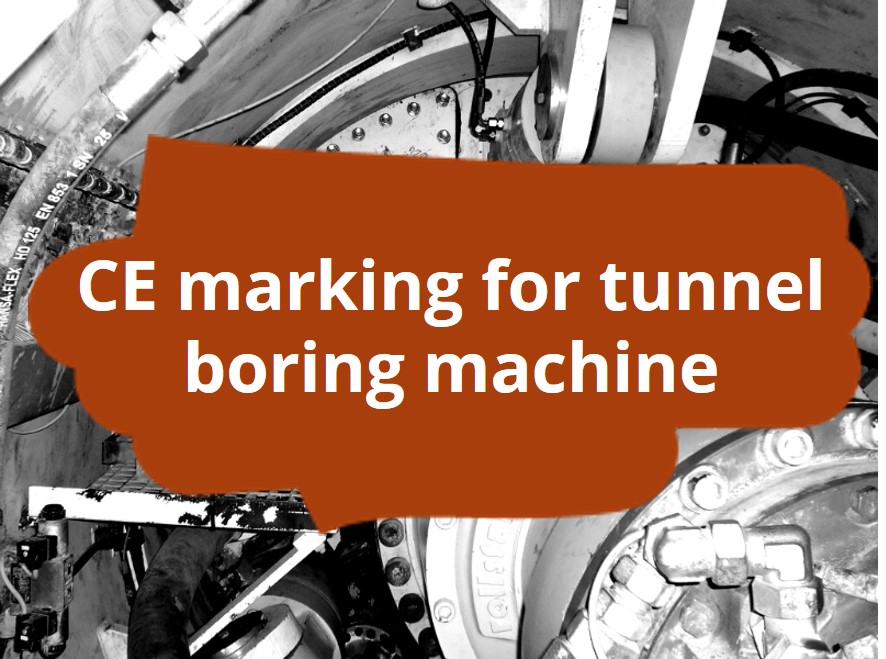
CE marking and conformity assessment of all life phases of a copper mining tunnel boring machine in Australia
easyCE supports the entire conformity assessment process including risk assessment up to the declaration of conformity ready for signature for all phases of the life cycle of a tunnelling machine for copper mining in Australia. The completely new concept of using multi-arm cutting heads required special attention during the process. In addition to the conventional regulations, special safety and technical requirements that apply in Australia were also taken into account.
RL & VO: MRL - 2006/30/EU, EMC - 2014/30/EU, Low voltage - 2014/35/EU, PED - 2014/68/EU, ATEX - 2014/34/EU
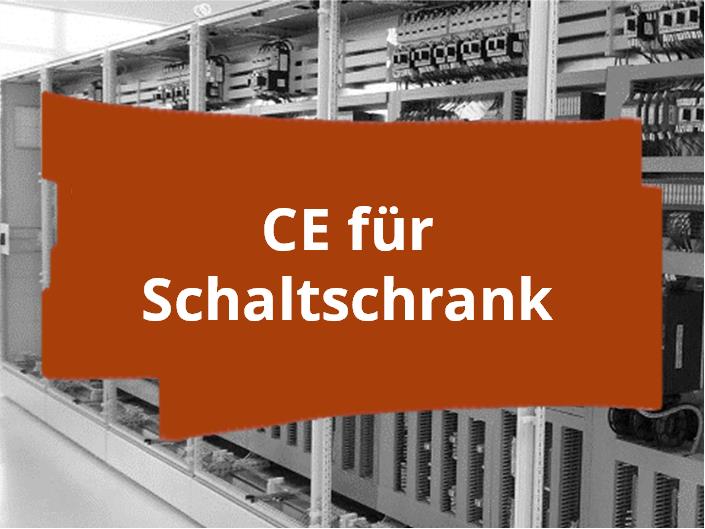
CE labelling of switch cabinets
easyCE supports the entire conformity assessment process, including risk assessment, right through to the declaration of conformity for control cabinets ready for signature. In particular, the requirements from the Machinery, EMC and Low Voltage Directives with regard to DIN EN 60204-1: 2019-06 and DIN EN IEC 61439-1: 2021-10 had to be observed. A checklist was also drawn up for the selection of components that must fulfil special requirements (supplier selection).
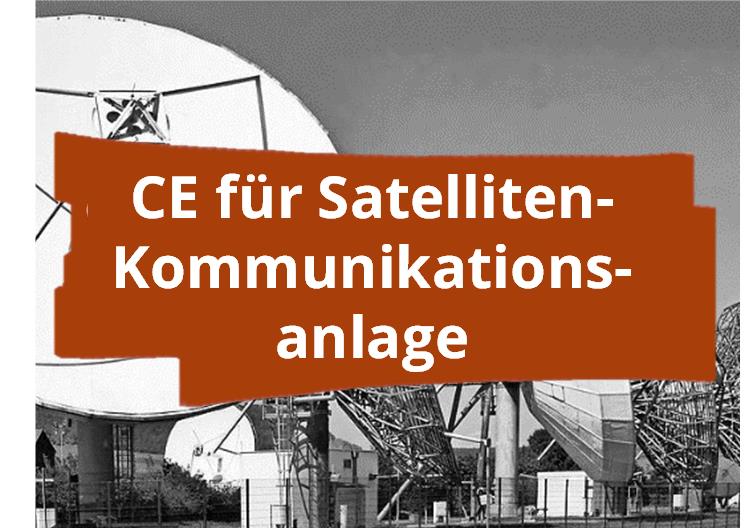
CE marking and declaration of conformity of a mobile satellite communication system
easyCE supports the entire conformity assessment procedure, including risk assessment in accordance with the EMC Directive, right up to the ready-to-sign declaration of conformity for a satellite communication system. The system ensures the redundant forwarding of TCP/IP data in order to send or receive it via two or more satellite antennas. The system is used wherever a mobile communication system needs to be set up quickly over long distances.
RL & VO: RED - 2014/53/EU, Low Voltage - 2014/35/EU, EMC - 2014/30/EU
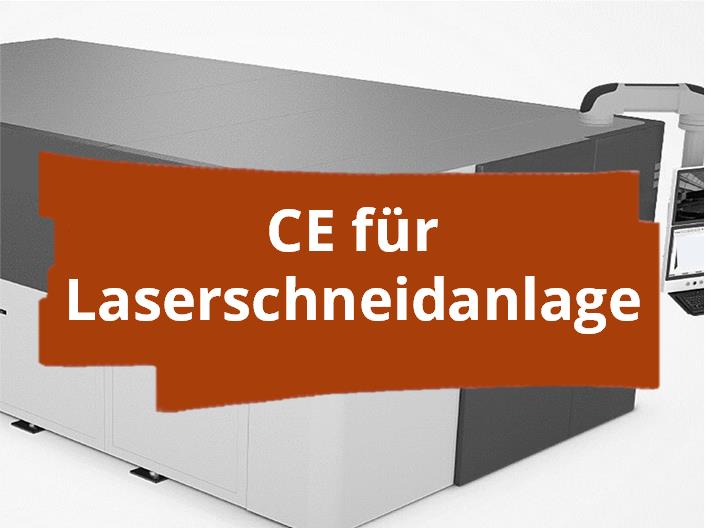
CE marking and declaration of conformity for a 2D laser cutting system
easyCE supports the entire conformity assessment procedure for a 2D laser cutting system with automatic pallet changer. The entire safety concept, including the 2-beam light barrier, was coordinated for the laser cutting system, the performance level was determined, a product analysis was created and a risk assessment was carried out in accordance with EN ISO 12100. Special requirements result for the mechanical components of the traverse for the laser cutting head, but especially for the kinematics of the pallet changer and laser cutting head. The cutting process (laser class 4) inside the cabin is safely shielded from the operator by laser protection screens, additional safety devices and the complete enclosure: laser class 1 outside the machine.
Takes into account among others: 2006/42/EC, 2014/30/EU, DIN EN 60825-1 etc.
Conformity assessment procedure and CE marking for hearing protection with communication function
easyCE successfully supports CE marking up to the ready-to-sign declaration of conformity for modern hearing protection with integrated communication function. The particular challenge was compliance with EN 352-8 requirements regarding the limitation of the audio signal to 82 dB(A) while ensuring the protective function according to EN 352-1 for passive noise attenuation.
Considering: 2016/425, 2014/53/EU
See more of our project references and success stories
Get CE-marking done in 3 simple steps
Step 1
Request expert opinion
Ask for our expert opinion free of charge and find out what is necessary for the CE marking of your product. Be prepared to describe your product in broad terms.
Step 2
Receive our offer
If your product is subject to CE marking, we offer you our support with the CE marking and all accompanying measures. We will be happy to explain necessary steps on the phone.
Step 3
We get it done
When you place an order, you will be assigned your own personal CE expert who will carry out your CE marking and accompany you throughout the entire process. Your expert will also be at your side after the CE marking has been successfully completed.
Get CE-marking done, worry-free
Trust the experts of product safety and conformity

Willy Lebherz - Founder and Managing Director of easyCE
- Expert in product safety and conformity since 1995
- Recipient of the "Medal of the Order of Merit of the Federal Republic of Germany", awarded in 1983 by the then Federal President Carl Carstens
- Master of measurement and control technology
- Captain (ret.), Project Officer for Technical Logistics in the Army Material Office and Chief of the Telecommunications Repair Company
easyCE is a digital, dynamic engineering office with a focus on product safety and product conformity - especially CE-marking. We support manufacturers, operators and dealers in designing products safely and offering them on the market in compliance. We are a "full-service provider" and can take over the entire conformity assessment process for you if you wish. To do this, we support you in carrying out risk assessments, researching standards, product analyses, developing suitable safety precautions, preparing user-friendly technical documentation, coordinating tests and all other accompanying measures. easyCE was founded in southern Germany, but is now active globally.
We know what you need to do to get CE-marking done, worry-free.