Guideline on explosives for civil purposes correctly applied: These requirements result for your CE-compliant product
You can affix the CE mark and sign the declaration of conformity without worries.
Willy Lebherz
Director & founder of easyCE GmbH

Declaration of conformity done!
Receive your CE declaration of conformity ready for signature.
Risk assessment completed!
CE mandatory risk analysis conducted.
Relevant directives & standards applied!
Your product evaluated against relevant directives and standards.
Technical documentation created!
Receive a pragmatic, user-friendly operating manual.
CE mark attached!
Simply affix the CE mark and you're done.
CE marking routines differ depending on your role
CE AS PRODUCER
The Directive on Explosives for Civil Purposes 2014/28/EU regulates the properties of explosives that may be used in the European Economic Area. Directive 2014/28/EU applies to explosives of "Class 1", according to the classification of dangerous goods established by the United Nations.
The experts at easyCE will be happy to assist you in placing your product on the market in the EEA and in assessing special cases. We support you with CE, UKCA and other markings.

FAQ
Scope and limits of the Directive, when does it apply?
Explosives for civilian purposes are explosives of "class 1" according to the classification of dangerous goods established by the United Nations. Examples include: Black powder, Nitroglycerin (desensitized), Dynamite, Most types of torpedoes, Mercury fulminate. Annex I to the Directive also contains a list of products.
Excluded from the scope of the Directive are, inter alia:
- Explosives, including ammunition, intended for use by the armed forces or the police in accordance with national legislation. Ammunition is defined as "projectiles with or without propellant charge and blanks used in handguns, other guns and artillery".
- Pyrotechnic articles such as fireworks are also not covered by this Directive. Pyrotechnic articles fall within the scope of Directive 2013/29/EU.
Conformity assessment procedures and type examination according to the Directive on explosives
The conformity assessment procedure for civil explosives requires testing by a manufacturer's laboratory or by another testing laboratory. Only after successful testing can an explosive be certified for conformity.
The type examination is an essential part of the conformity assessment procedure for civil explosives. The Directive provides for different modules for the conformity assessment procedure, depending on the level of risk and the level of safety required. These modules are described in Annex III to the Directive:
- EU type-examination (module B) and, at the choice of the manufacturer, one of the following tests:
- Conformity with the design on the basis of an internal production control and monitored product tests at irregular intervals (module C2)
- Conformity with the design on the basis of quality assurance for the production process (module D)
- Conformity with the design based on the quality assurance of the product (module E)
- Conformity with the design on the basis of a product test (module F)
- Conformity based on an individual test (module G)
What is the distinction between the Pyrotechnics Directive and this Directive? What is the difference in terms of products in the scope?
The use of pyrotechnic articles, in particular fireworks, is subject to different age, culture, customs and customs restrictions in each Member State. It is therefore necessary to take into account national measures to ensure public safety in relation to pyrotechnic articles.
Therefore, a different directive is needed in this respect. Pyrotechnic articles are covered by Directive 2013/29/EU and not by Directive 2014/28/EU.
Pyrotechnic items should include:
- fireworks,
- pyrotechnic objects for theatre,
- Pyrotechnic articles for technical purposes, such as gas generators used in airbags or belt tensioners.
The following definitions apply:
- "Fireworks": a pyrotechnic article intended for entertainment purposes
- "Pyrotechnic": products for theatrical purposes: pyrotechnic products intended for use on indoor or outdoor stages, including film and television productions, or for similar purposes
- pyrotechnic objects for vehicles: Components of safety devices in vehicles containing pyrotechnic substances used to trigger these or other devices
What has the European Council established in the new legal framework?
In the new legal framework, the European Council stated that: a large number of products available on the market do not meet the requirements set out in the directives.
Some actors simply succeed in applying the CE marking on their products, although these products do not meet the conditions for a CE marking. Importers and distributors do not carry out the necessary checks to ensure that they deliver only compliant products. Member States impose different obligations on both importers and distributors when it comes to ensuring that the products comply with the applicable requirements. Also, the measures taken by national authorities against non-compliant products (such as marketing bans, withdrawals, etc.). Sometimes they differ from one Member State to another.
What role does HSE play in regulating explosives?
As the Directive for civil purposes concerns the Explosives Regulation within the competence of the HSE, the HSE is responsible for the implementation of the Directive and is obliged to implement it and
also to consult on the proposed implementation. HSE will also hold consultations on technical issues related to the recast (and is not involved in market surveillance) within a working group representing the civil use sector.
Summary of the questions asked by the industry and their answers regarding the CE marking of locally mixed explosives?
The general and main essential requirements apply in any case to explosives produced on the ground which fall within the scope of the Explosives Directive. These explosives must also be CE marked.
With regard to the CE marking, Article 23.5 of Directive 2014/28/EU states: "For explosives manufactured for personal use, for explosives transported and delivered unpackaged, or for explosives produced in mobile explosives manufacturing units (MEMUs), In order to be discharged directly into the blast hole and in the case of explosives produced at the blast sites and loaded immediately after production (in-situ production), the CE marking shall be affixed to the documents carried along.
The CE marking and the directive on explosives for civil purposes?
Directive 93/15/EEC applies to explosives defined as "objects and materials listed in the United Nations Recommendations for the Carriage of Dangerous Goods and covered by Class I of those Recommendations". It shall not apply to explosives intended for police, pyrotechnicians, armed forces or ammunition, unless they are safe transport procedures within the Union.
Annex I to the Directive sets out the essential safety requirements that must be met in order for the CE marking to be affixed and the explosives to be placed on the European market.
Which body is responsible for allowing the manufacturer to CE mark the product?
Manufacturers are primarily responsible for affixing the CE marking. However, if the CE marking appears on products with an identification number of a notified body, this notified body is also responsible.
The CE marking should be affixed at the end of the production phase. The CE marking should only be followed by the identification number of the notified body operating at the production control stage.
What is the status of shock-wave tubes under the directive?
Shock tubes are used to transmit the ignition pulse over short or medium distances through a plastic tube, leaving the tube intact and not breaking. Due to the low external impact of shock-wave tubes, they can be exempted from Class 1
of the Dangerous Goods Transport Regulations in the event of ignition (see, for example, section 2.2.1.1.8 in the ADR), as they are not connected to an igniter, are not dangerous. As such, they can not be used for explosive purposes, have no explosive properties and can be considered as a lead wire of electric igniters. However, a shock wave tube contains explosives whose sound level reaches such levels that exclusion from Class 1 is not possible under the legislation on the transport of dangerous goods.
In view of the design of the shock wave tubes and their safety in the event of explosions, shock wave tubes tend to fall within the scope of the directive. If they are attached to the explosive capsule to form an explosive capsule (for example, as a non-electronic igniter), they can undoubtedly be subject to the Directive's essential safety requirements (ESR) (For example, the proper function between the shock tube and the explosive capsule would be part of the conformity assessment).
Date of application of the rules on the traceability of explosives
Pursuant to Article 15, paragraph 1 of Directive 2008/43/EC (hereinafter referred to as "Directive on the traceability of explosives"), data collection and recording should be carried out in accordance with the provisions of the Directive (hereinafter referred to as "Traceability Rules") of 5 April 2015.
The competent authorities point out that the rules on traceability are not fully applicable to explosives which have been placed on the market before 5 April 2013 and are only properly labelled in the Directive on the traceability of explosives.
Member States could continue to allow the storage or use of such explosives without requiring traceability in accordance with this interpretation.
Articles 13 and 14 of the Explosives Traceability Directive in DG GROW documents? D..2 states that the traceability obligations can be applied to all companies in the explosive sector, including licensed or authorised users, from 5 April 2015. It also states that traceability obligations will apply to all explosives from 5 April 2015, without distinction between explosives before or after 5 April 2013 (the date when the unique marking became mandatory) were imported or manufactured.
Are explosives subject to the traceability requirements of Directive 2008/43/EC when passing through EU territory?
"Explosives in transit" is a term that states that the explosives come from a non-European country, are intended for a non-European company and have never been placed on the Union market. Furthermore, that "the provisions on traceability of Directive 2008/43/EC are to be understood as referring to all provisions of this Directive.
An important agreement between the competent authorities of the Member States and the Commission: services regulated by official customs control are not covered by Directive 2008/43/EC. This results in the following derivation:
In accordance with Article 3, paragraph 1, first indent of Directive 2008/43/EC, the product labelling requirements referred to in Chapter 2 of the Directive apply only to "explosives sector companies producing or importing explosives or assembling explosive capsules". There is no manufacturer or importer in the Union for transit. Explosives transported in transit by economic operators shall not be considered as importers or producers. Therefore, the product labelling in Chapter 2 of the Directive does not apply to explosives in transit traffic. The application of the rules on data collection and the keeping of records and documents in Chapter 3 of the Directive requires the application of those rules. The latter provisions cannot be applied to continuous explosives.
What are the related policy objectives and their intended impact?
The main objective is to meet the commitments made by the United Kingdom and then implement them through EU directives and ensure that the implementation of the changes is clear, is easy to understand
and coherent and does not place a disproportionate burden on industry, stakeholders and also regulators. The amendments will ensure that continued alignment with other EU Member States is successfully implemented and a uniform approach to the regulation of the placing on the market of explosives for civilian purposes is pursued.
What policy options were considered, including any alternatives to regulation?
In the present impact assessment, only one option is examined, as only this is practicable:
Transposition of the revised Directive by an amending SI for the 2014 Explosives Regulation (ER2014), as this is in line with the UK's commitment to implement EU directives.
Other options, such as the provision of guidelines or the maintenance of the status quo, were not considered practicable, as obligations under EU law would not be fulfilled in both cases.
Who are authorized representatives?
The placing on the market of explosives in the EU requires the use of an authorised representative established in the EU.
In addition, manufacturers may appoint an authorised representative to maintain declarations of conformity and technical documentation cooperating with the Market Surveillance Authority and cooperating with the competent authority in all measures to eliminate the hazards posed by the civilian explosives covered by the contract.
How to obtain the CE marking in accordance with this Directive and what requirements must be met to obtain the CE marking?
The conformity assessment procedure under Directive 2014/28/EU consists of two phases:
- Design phase - EU-type examination (Module B)
- Production phase
- Conformity with the design based on monitored product tests at specific random intervals (module C2) and internal production control.
- or conformity with the design based on quality assurance (module E).
- or conformity with the design on the basis of an examination of the products (module F).
- Both phases together
- Conformity based on individual testing (Module G).
- Compulsory examinations required for the Model Examination (Module B):
- Determination of the density of explosives
- Determination of the friction sensitivity of explosives
- Determination of sensitivity to the action of explosives
- Determination of the thermal stability of explosives
- Determination of the detonation rate
- Determination of the exact sensitivity to the friction of explosives
- the name and address of the manufacturer, if the application is made by an authorised representative, the name and address of that applicant.
- EU tax number
- Declaration that no other notified body has submitted an equivalent application
- Information on the product submitted for type-examination:
- Technical documentation
- General description of the product
- Main parts, components, production plans and sketches
- Design of the marking
Hundreds of companies trust easyCE














With easyCE, product compliance is really 'easy'
Approach to CE marking
Type and manner of support
Scope of support
Contact during project processing

 Find the easiest way to obtain the CE mark
Abbreviated process for CE derived directly from CE
All-inclusive or modular – whatever you prefer
Personal contact with experts who take your wishes into account
other CE service providers
 Often lacking in sound judgement and unnecessarily complicated
Mostly flexible but often bureaucratic
Mostly flexible in terms of support scope
Mostly personal contact
CE Software
Follows standardised process; special circumstances not taken into account
Double burden for you: software management + no support during processing
Only according to software scope and purchased modules
No contact
You want support that lightens your workload and doesn't create more work.

This is what successful projects look like
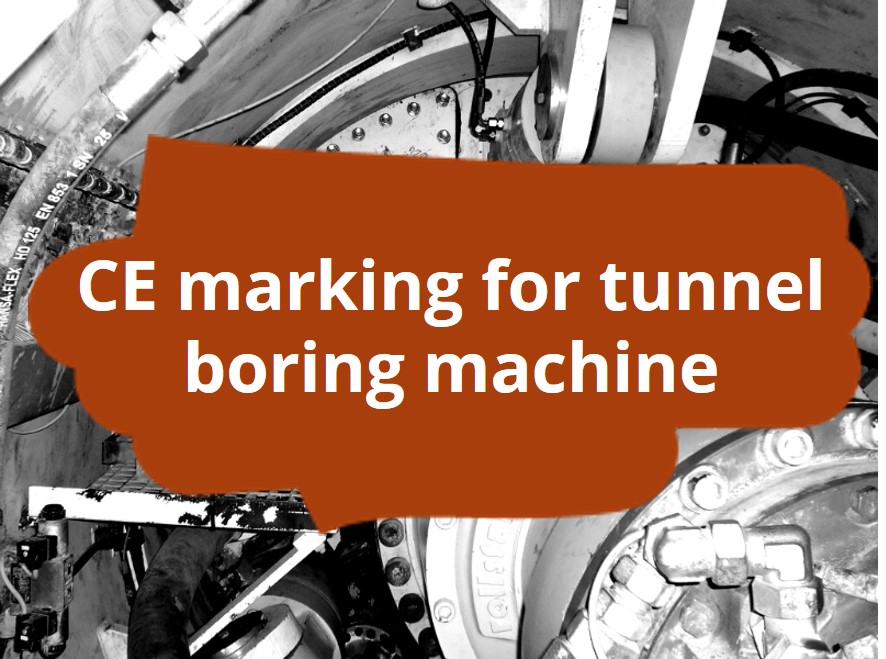
CE marking and conformity assessment of all life phases of a copper mining tunnel boring machine in Australia
easyCE supports the entire conformity assessment process including risk assessment up to the declaration of conformity ready for signature for all phases of the life cycle of a tunnelling machine for copper mining in Australia. The completely new concept of using multi-arm cutting heads required special attention during the process. In addition to the conventional regulations, special safety and technical requirements that apply in Australia were also taken into account.
RL & VO: MRL - 2006/30/EU, EMC - 2014/30/EU, Low voltage - 2014/35/EU, PED - 2014/68/EU, ATEX - 2014/34/EU

CE labelling of switch cabinets
easyCE supports the entire conformity assessment process, including risk assessment, right through to the declaration of conformity for control cabinets ready for signature. In particular, the requirements from the Machinery, EMC and Low Voltage Directives with regard to DIN EN 60204-1: 2019-06 and DIN EN IEC 61439-1: 2021-10 had to be observed. A checklist was also drawn up for the selection of components that must fulfil special requirements (supplier selection).

CE marking and declaration of conformity of a mobile satellite communication system
easyCE supports the entire conformity assessment procedure, including risk assessment in accordance with the EMC Directive, right up to the ready-to-sign declaration of conformity for a satellite communication system. The system ensures the redundant forwarding of TCP/IP data in order to send or receive it via two or more satellite antennas. The system is used wherever a mobile communication system needs to be set up quickly over long distances.
RL & VO: RED - 2014/53/EU, Low Voltage - 2014/35/EU, EMC - 2014/30/EU
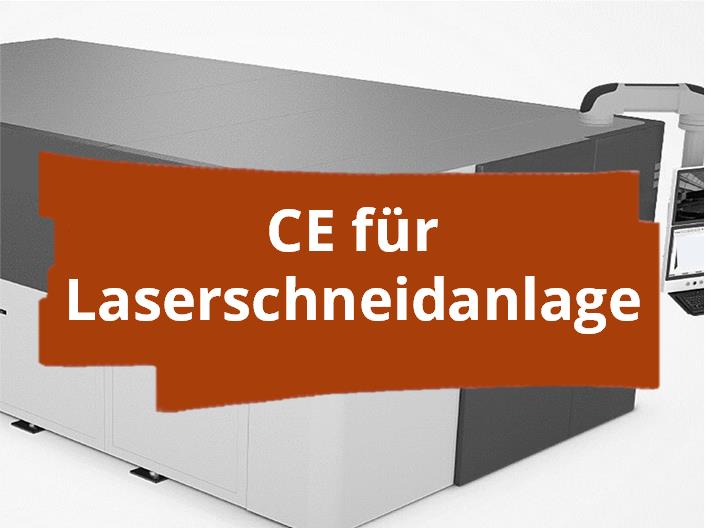
CE marking and declaration of conformity for a 2D laser cutting system
easyCE supports the entire conformity assessment procedure for a 2D laser cutting system with automatic pallet changer. The entire safety concept, including the 2-beam light barrier, was coordinated for the laser cutting system, the performance level was determined, a product analysis was created and a risk assessment was carried out in accordance with EN ISO 12100. Special requirements result for the mechanical components of the traverse for the laser cutting head, but especially for the kinematics of the pallet changer and laser cutting head. The cutting process (laser class 4) inside the cabin is safely shielded from the operator by laser protection screens, additional safety devices and the complete enclosure: laser class 1 outside the machine.
Takes into account among others: 2006/42/EC, 2014/30/EU, DIN EN 60825-1 etc.
See more of our project references and success stories
Get CE-marking done in 3 simple steps
Step 1
Request expert opinion
Ask for our expert opinion free of charge and find out what is necessary for the CE marking of your product. Be prepared to describe your product in broad terms.
Step 2
Receive our offer
If your product is subject to CE marking, we offer you our support with the CE marking and all accompanying measures. We will be happy to explain necessary steps on the phone.
Step 3
We get it done
When you place an order, you will be assigned your own personal CE expert who will carry out your CE marking and accompany you throughout the entire process. Your expert will also be at your side after the CE marking has been successfully completed.
Get CE-marking done, worry-free
Trust the experts of product safety and conformity

Willy Lebherz - Founder and Managing Director of easyCE
- Expert in product safety and conformity since 1995
- Recipient of the "Medal of the Order of Merit of the Federal Republic of Germany", awarded in 1983 by the then Federal President Carl Carstens
- Master of measurement and control technology
- Captain (ret.), Project Officer for Technical Logistics in the Army Material Office and Chief of the Telecommunications Repair Company
easyCE is a digital, dynamic engineering office with a focus on product safety and product conformity - especially CE-marking. We support manufacturers, operators and dealers in designing products safely and offering them on the market in compliance. We are a "full-service provider" and can take over the entire conformity assessment process for you if you wish. To do this, we support you in carrying out risk assessments, researching standards, product analyses, developing suitable safety precautions, preparing user-friendly technical documentation, coordinating tests and all other accompanying measures. easyCE was founded in southern Germany, but is now active globally.
We know what you need to do to get CE-marking done, worry-free.