CEInternational product-compliance done!
Super easy with our help.
You simply apply the CE mark and sign the Declaration of Conformity, worry-free
Willy Lebherz
Director & founder of easyCE GmbH


International market access!
Receive clearly researched, actionable requirements for your product's market access
Mutual recognition applied!
We assess the applicability of mutual recognition agreements for your product
Applicable regulations applied!
We identify and assess your product against relevant international market regulations
Technical documentation created!
You receive compliant technical documentation for the respective market in the required language
This is what you need to consider for international product compliance
Compliant through “Mutual Recognition Agreements”
International market access and ensuring product compliance through recognition of the CE marking
Agreements on mutual recognition, known as Mutual Recognition Agreements (MRAs), are international agreements in which two or more countries agree to mutually recognize the results of conformity assessments. The EU has selected different partners for the recognition of conformity assessments depending on the product category. These include, among others, Australia, Canada, Israel, Japan, New Zealand, Switzerland, and the USA.
The experts at easyCE are happy to assist you with placing your product on the market. If you export or import products internationally, we will gladly check the applicability of MRAs for you.

FAQ
What are mutual recognition agreements for product compliance?
A Mutual Recognition Agreement (MRA) is an international agreement in which two or more countries agree to exchange the results of conformity assessment by mutually designated
to mutually recognize conformity assessment bodies (CABs) within the scope of the agreement. Since the establishment of the World Trade Organization (WTO) in 1995, MRAs have become increasingly common within and between different trading blocs, including APEC and the European Union.
What is the background and purpose of mutual recognition agreements for product compliance?
Increasing global trade has raised serious concerns about the free movement of goods across borders for the following reasons:
- Unnecessary regulatory divergence between legal systems
- Imposition of trade costs through tariffs and technical barriers to trade
With the cross-border integration of markets, there is growing awareness of the potential of international regulatory cooperation (IRC) to help policymakers remove potential barriers that unduly hinder international trade. This has prompted the European Commission to conclude Mutual Recognition Conformity Assessment Agreements (MRAs) with markets outside the European Union.
MRAs are trade agreements designed to ensure consumer protection and compliance with local legislation:
- Facilitating market access without compromising national regulations
- Promote greater international harmonization of compliance standards.
The designation of mutually recognized conformity assessment bodies (CABs) is an important step towards mutual agreements that enable EU authorities and their partners to:
- Rely on others' GMP inspection system
- Exchange of information on inspections and quality defects
- Renunciation of imports into the other territory
The advantages of these MRAs include the avoidance of:
- Double checks
- Uncertainty about possible rejection due to minor differences in testing or verification, and their costly corrections
- Delays in placing products on the market.
All these trade facilitations take place without affecting the legal requirements in both countries.
What role do conformity assessment bodies (CABs) play for CE-certified products within the framework of mutual recognition agreements for product compliance?
The core function of MRAs is the designation of CABs (Conformity Assessment Bodies). An important condition in the Mutual Recognition Agreements is the recognition of conformity assessment results (e.g., testing or certification).
which were carried out by one Contracting Party (non-EU country) by the Conformity Assessment Bodies (CABs) designated by the other Contracting Party (EU) in order to demonstrate compliance with the national legislation of the first Contracting Party (non-EU country) and vice versa.
Under the mutual recognition agreements, Member States' regulatory authorities can designate notified bodies within their own territory. The corresponding lists of notified laboratories, inspection bodies, and conformity assessment bodies, both in the EU and in the third country, are included in the mutual agreements. Links to the existing lists are included in this document.
Which countries have concluded agreements with the EU on the mutual recognition of conformity assessments?
Which countries have concluded agreements with the EU on the mutual recognition of conformity assessments?
- Australia
- Canada
- Israel
- Japan
- New Zealand
- Switzerland
- USA
What agreements exist for the mutual recognition of conformity assessments with the EU/CE conformity assessment?
Each member state has a specific agreement with the EU that covers a different area. Below you will find the links to the documented agreements under the MRA for each country
*Directive 2008/57/EC and EU-Switzerland land transport agreement - LTA list Switzerland
What is the scope of the Agreement on Mutual Recognition of Conformity Assessment with Australia and the list of authorised conformity assessment bodies specifically for Australia?
The following sectors are covered by the agreement between the EU and Australia:
- Automotive products: (The End-of-Life Vehicles Directive 2000/53/EC regulates automotive products. It is the first EU waste directive to introduce the concept of extended producer responsibility).
- EMC
- Low-voltage devices
- Machinery
- Medical devices
- Pressure equipment
- TTE: (Traditionally, the R&TTE Directive was the requirement for radio transmitters and receivers and telephone systems. The Radio Equipment Directive-RED has replaced the R&TTE. After June 2017, only the RE Directive is applicable).
- GMP: (Directives 91/356 and 91/412/EEC lay down the principles and guidelines of good manufacturing practice for medicinal products for human and veterinary use respectively).
Conformity assessment centres
What is the scope of the Agreement on Mutual Recognition in relation to Conformity Assessment with Canada and the list of authorised conformity assessment bodies specifically for Canada?
The following sectors are covered by the agreement between the EU and Canada:
- Electrical and electronic equipment, including electrical systems and devices, as well as associated components: (The WEEE Directive and the Low Voltage Directive regulate the design and production of electrical and electronic equipment).
- Radio and telecommunications terminal equipment
- Electromagnetic compatibility (EMC)
- Toys
- Building products
- Machines including components and assemblies
- Measuring devices
- Hot water boilers, including associated appliances
- Devices for use in potentially explosive atmospheres (ATEX devices)
- Devices related to noise pollution in the environment
- Recreational craft, including their components
Conformity assessment centres
What is the scope of the Agreement on Mutual Recognition in relation to Conformity Assessment with Israel and the list of authorised conformity assessment bodies specifically for Israel?
The agreement between the EU and Israel covers GLP (Good Laboratory Practice).
The GLP principles (Good Laboratory Practice) validate data generated during the testing of chemicals by the GLP Directive 2004/10/EC of the European Parliament.
What is the scope of the Agreement on Mutual Recognition in relation to Conformity Assessment with Japan and the list of authorised conformity assessment bodies specifically for Japan?
The following sectors are covered by the agreement between the EU and Japan:
- Electrical products
- F&TTE
- GMP
- GLP
Conformity assessment centres
What is the scope of the Agreement on Mutual Recognition of Conformity Assessment with New Zealand and the list of authorised conformity assessment bodies specifically for New Zealand?
The following sectors are covered by the agreement between the EU and New Zealand:
- EMC
- Low-voltage devices
- Machinery
- Medical devices
- Pressure equipment
- TTE
- GMP
Conformity assessment centres
What is the scope of the agreement on mutual recognition of conformity assessments with Switzerland and the list of authorised conformity assessment bodies specifically for Switzerland?
The following sectors are covered by the agreement between the EU and Switzerland. For Switzerland, each sector is classified as a different chapter and a list of the different CABs for each chapter is given below:
- Machinery (Chapter 1)
- Personal protective equipment (Chapter 2)
- Toys (Chapter 3)
- Medical devices (Chapter 4)
- Gas appliances (chapter 5)
- Pressure vessel (chapter 6)
- Radio and telecommunications terminal equipment (R & TTE) (Chapter 7)
- Devices intended for use in potentially explosive atmospheres (chapter 8)
- Electrical equipment (Chapter 9)
- Construction machinery and equipment (Chapter 10)
- Measuring devices and prepackages (chapter 11)
- Motor vehicles (Chapter 12)
- Agricultural and forestry tractors (Chapter 13)
- Good Laboratory Practice - GLP (Chapter 14)
- Good manufacturing practice (GMP) for medicinal products, batch inspection and certification (Chapter 15)
- Building products (Chapter 16)
- Lifts (Chapter 17)
- Biocidal products (Chapter 18)
- Ropeways (Chapter 19)
- Explosives for civilian use (Chapter 20)
Conformity assessment centres
- To be found in the NANDO database
- Not in the NANDO database
| Kapitel 12: | Swiss authorities |
| Kapitel 13: | Swiss authorities |
| Kapitel 14: | The test facilities recognised under the GLP monitoring programme of the respective Contracting Party.. |
| Kapitel 15: | Die amtlichen The official inspections of good manufacturing practice of the individual parties. |
| Kapitel 18: | Federal Office of Public Health, Mandatory reporting of chemicals |
List of CABs approved by the EU Member States
- which can be found in the NANDO database
- not in the NANDO database
| Kapitel 11: | Authorities responsible for calibration. |
| Kapitel 12: | The authorities, technical services and test centres responsible for type-approval |
| Kapitel 14: | The test facilities recognised under the GLP monitoring programme. |
| Kapitel 15: | The official Good Manufacturing Practice inspections of each Party. |
| Kapitel 18: | The competent authorities of the Member States of the European Union |
What is the scope of the Agreement on Mutual Recognition of Conformity Assessment with the USA and the list of authorised conformity assessment bodies specifically for the USA?
The following sectors are covered by the agreement between the EU and the USA:
- EMC
- Telecommunications equipment
- Ship equipment: (the current MED Directive 2014/90/EU of the European Parliament and of the Council on marine equipment has been in force since 18 September 2016).
Conformity assessment centres
What further documentation or evidence is required if a CE-certified product is exported to a country that has not signed an EU MRA?
If an MRA applies to someone, they must first contact a CAB, which will test the product. Any CE-certified product can apply for an MRA certificate, i.e. an authorisation to trade in a country that is not a member of the EU but has signed the MRA.
An MRA guarantees that a product manufactured in an exporting country has been certified by an accredited certification body (CAB) that has been "recognised" by the other importing country as part of the MRA procedures, without further tests or checks can enter the market of the importing country of destination and vice versa. For example, a device approved in Australia by the TGA, the Australian regulatory authority, is good enough to be placed on the EC market, most of the time anyway. EC certification under the MRA would be a largely administrative process rather than a further comprehensive assessment by the TGA. The entire MRA is based on the assumption that the requirements in Australia and the EC are equivalent, with the differences being considered insignificant.
This means that no additional proof or document is required if the product is already CE-certified. Only the national logo must in some cases be added to the CE labelling
What are the limits of mutual recognition agreements?
Mutual Recognition Agreement (MRA) are a limited option insofar as the conformity assessments of two countries are not really equivalent.
The sole purpose is to avoid double testing in international trade and to facilitate the free market. Neither the regulatory objectives nor the technical requirements, nor the conformity assessment procedures are really equivalent in two countries.
In addition, MRAs can only be concluded for directives for which there is corresponding legislation in each contracting party. In the US, for example, there is no federal legislation covering the safety of machinery, so there is no MRA between the EU and the US on machinery. MRAs are therefore limited to different sectors of the economy.
How well do the MRAs work in practice?
According to a recent OECD survey, the Mutual Recognition Agreement (MRA) is generally working well. The benefits include the facilitation of cross-border trade and a broader range of goods and services.
Hundreds of companies trust easyCE














With easyCE, product compliance is really 'easy'
Approach to CE marking
Type and manner of support
Scope of support
Contact during project processing

 Find the easiest way to obtain the CE mark
Abbreviated process for CE derived directly from CE
All-inclusive or modular – whatever you prefer
Personal contact with experts who take your wishes into account
other CE service providers
 Often lacking in sound judgement and unnecessarily complicated
Mostly flexible but often bureaucratic
Mostly flexible in terms of support scope
Mostly personal contact
CE Software
Follows standardised process; special circumstances not taken into account
Double burden for you: software management + no support during processing
Only according to software scope and purchased modules
No contact
You want support that lightens your workload and doesn't create more work.

This is what successful projects look like
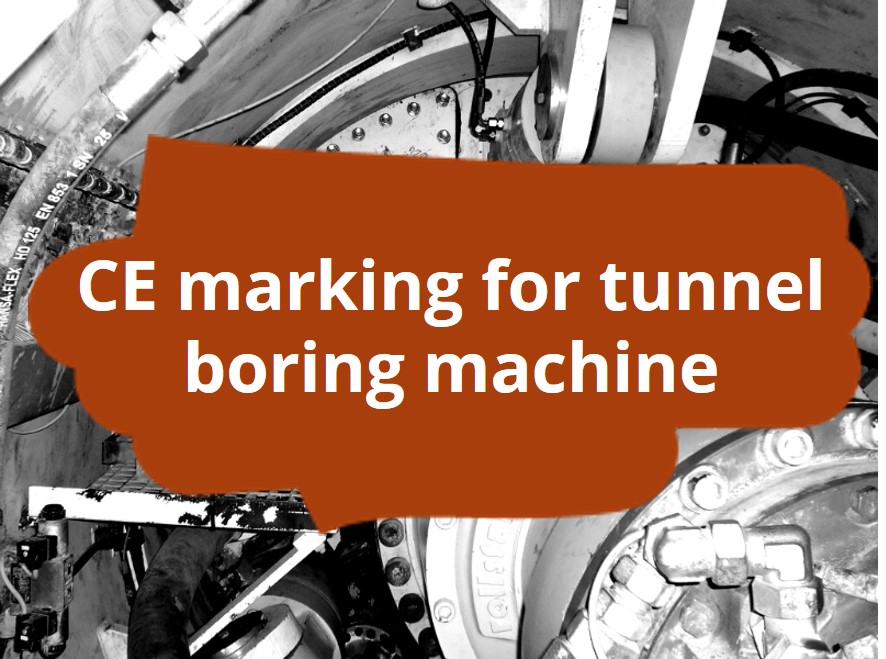
CE marking and conformity assessment of all life phases of a copper mining tunnel boring machine in Australia
easyCE supports the entire conformity assessment process including risk assessment up to the declaration of conformity ready for signature for all phases of the life cycle of a tunnelling machine for copper mining in Australia. The completely new concept of using multi-arm cutting heads required special attention during the process. In addition to the conventional regulations, special safety and technical requirements that apply in Australia were also taken into account.
RL & VO: MRL - 2006/30/EU, EMC - 2014/30/EU, Low voltage - 2014/35/EU, PED - 2014/68/EU, ATEX - 2014/34/EU
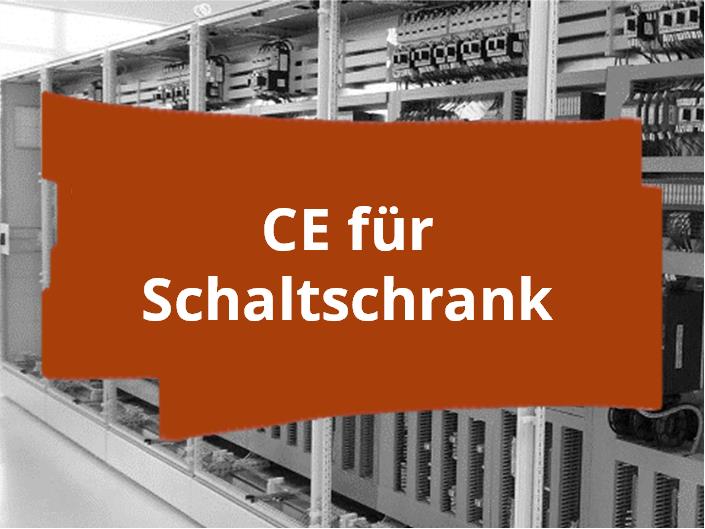
CE labelling of switch cabinets
easyCE supports the entire conformity assessment process, including risk assessment, right through to the declaration of conformity for control cabinets ready for signature. In particular, the requirements from the Machinery, EMC and Low Voltage Directives with regard to DIN EN 60204-1: 2019-06 and DIN EN IEC 61439-1: 2021-10 had to be observed. A checklist was also drawn up for the selection of components that must fulfil special requirements (supplier selection).

CE marking and declaration of conformity of a mobile satellite communication system
easyCE supports the entire conformity assessment procedure, including risk assessment in accordance with the EMC Directive, right up to the ready-to-sign declaration of conformity for a satellite communication system. The system ensures the redundant forwarding of TCP/IP data in order to send or receive it via two or more satellite antennas. The system is used wherever a mobile communication system needs to be set up quickly over long distances.
RL & VO: RED - 2014/53/EU, Low Voltage - 2014/35/EU, EMC - 2014/30/EU
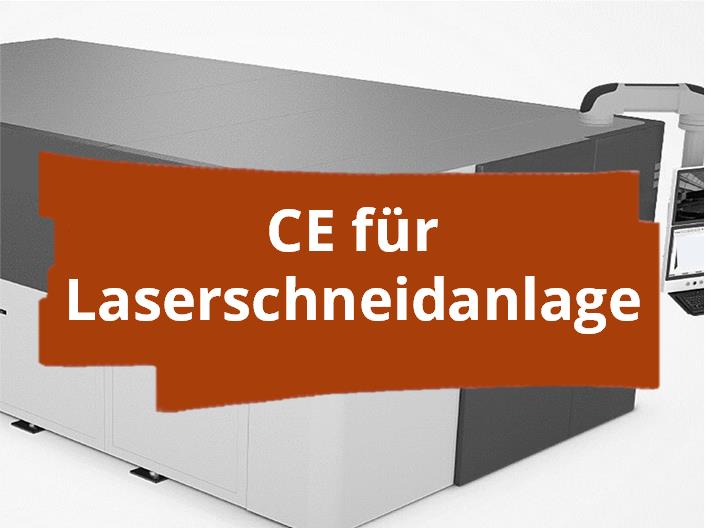
CE marking and declaration of conformity for a 2D laser cutting system
easyCE supports the entire conformity assessment procedure for a 2D laser cutting system with automatic pallet changer. The entire safety concept, including the 2-beam light barrier, was coordinated for the laser cutting system, the performance level was determined, a product analysis was created and a risk assessment was carried out in accordance with EN ISO 12100. Special requirements result for the mechanical components of the traverse for the laser cutting head, but especially for the kinematics of the pallet changer and laser cutting head. The cutting process (laser class 4) inside the cabin is safely shielded from the operator by laser protection screens, additional safety devices and the complete enclosure: laser class 1 outside the machine.
Takes into account among others: 2006/42/EC, 2014/30/EU, DIN EN 60825-1 etc.
More project references and success stories
Get CE-marking done in 3 simple steps
Step 1
Request expert opinion
Ask for our expert opinion free of charge and find out what is necessary for the CE marking of your product. Be prepared to describe your product in broad terms.
Step 2
Receive our offer
If your product is subject to CE marking, we offer you our support with the CE marking and all accompanying measures. We will be happy to explain necessary steps on the phone.
Step 3
We get it done
When you place an order, you will be assigned your own personal CE expert who will carry out your CE marking and accompany you throughout the entire process. Your expert will also be at your side after the CE marking has been successfully completed.
Get CE-marking done, worry-free
Trust the experts of product safety and conformity

Willy Lebherz - Founder and Managing Director of easyCE
- Expert in product safety and conformity since 1995
- Recipient of the "Medal of the Order of Merit of the Federal Republic of Germany", awarded in 1983 by the then Federal President Carl Carstens
- Master of measurement and control technology
- Captain (ret.), Project Officer for Technical Logistics in the Army Material Office and Chief of the Telecommunications Repair Company
easyCE is a digital, dynamic engineering office with a focus on product safety and product conformity - especially CE-marking. We support manufacturers, operators and dealers in designing products safely and offering them on the market in compliance. We are a "full-service provider" and can take over the entire conformity assessment process for you if you wish. To do this, we support you in carrying out risk assessments, researching standards, product analyses, developing suitable safety precautions, preparing user-friendly technical documentation, coordinating tests and all other accompanying measures. easyCE was founded in southern Germany, but is now active globally.
We know what you need to do to get CE-marking done, worry-free.