Overview of the CE marking Directives
- Get an overview of the CE marking guidelines to determine whether your product is subject to CE marking.
- Find out details about the most important directives or regulations on CE marking and get your questions answered
- Questions such as:
- What do the EMC, low voltage and machinery directives require?
- When must the ATEX directive be observed?
- What are the specifics of RoHS marking?
Willy Lebherz
Director & founder of easyCE GmbH


Declaration of conformity done!
Receive your CE declaration of conformity ready for signature.
Risk assessment completed!
CE mandatory risk analysis conducted.
Relevant directives & standards applied!
Your product evaluated against relevant directives and standards.
Technical documentation created!
Receive a pragmatic, user-friendly operating manual.
CE mark attached!
Simply affix the CE mark and you're done.
Understand the specifics of your industry in CE marking
ATEX Dir - 2014/34/EU
Elevator Dir - 2014/33/EU
Construction Products Reg - 2011/305/EU
Pressure Vessels Dir - 2014/29/EU
Pressure Equipment Dir - 2014/68/EU
EMC Dir - 2014/30/EU
Explosives Dir - 2014/28/EU
Radio Dir - 2014/53/EU
Gas Equipment Dir - 2016/426/EU
Boiler Dir - 92/42/EWG
In-Vitro Dir - 2017/746/EU
Machines Dir - 2006/42/EG
Machines Reg - 2023/1230/EU
Medical Products Dir - 2007/47/EG
Medical Products Reg - 2017/745/EU
Measuring Instruments Dir - 2014/32/EU
Non Automatic Instruments Dir - 2014/31/EU
Low Voltage Dir - 2014/35/EU
Eco-Design Dir - 2009/125/EC
Outdoor Dir - 2000/14/EG
PPE Reg - 2016/425/EU
Pyrotechnic Articles Dir - 2013/29/EU
ROHS Dir - 2011/65/EU
Cable Way Reg - 2016/424/EU
Toys Reg - 2009/48/EG
Sportboats Dir - 2013/53/EU

FAQ
When must the ATEX directive be observed and what does it require?
The ATEX Directive or the EU Directive 2014/34/EU deals with "devices and protection systems for intended use in hazardous areas". It describes how products intended for use in an environment with an explosive atmosphere
must be made. The ATEX Directive applies to all electrical and non-electrical devices intended for use in hazardous areas. Hazardous areas are classified into zones 0, 1, 2, 20, 21 and 22. Read our article on The ATEX Directive correctly applied: These requirements result for your product to learn more details.
What does the EMC Directive on electromagnetic compatibility of products require and when should it be applied?
The Electromagnetic Compatibility Directive (EMC 2014/30/EU) aims to minimize the side effects caused by interference between electromagnetic devices. The Directive generally applies to a wide range of equipment,
including electrical and electronic equipment, apparatus and systems. For the purposes of the Directive, the term "equipment" is defined as any device or fixed installation. Components and assemblies are also included. Learn more about the correct application and the resulting requirements for products according to the EMC directive. Read our article "The EMC Directive correctly applied to CE marking" for more details.
Which products are covered by the Low Voltage Directive (LVD 2014/35/EU) and which characteristics do they have to have?
Electrical equipment sold in the EU must bear the CE marking. Therefore, distributors wishing to place electronic products on the EU market must deal with the Low Voltage Directive (LVD).
Manufacturers generally deal with questions such as: Which products are affected by this directive? What is the scope? Where ends the scope or? How is it linked to other policies and products outside the scope (such as military use)? How is the CE marking process defined in the Directive? What must be done under the Directive to ensure conformity? Read our article "The Low Voltage Directive correctly applied to CE marking" for more details.
What does the ROHS Directive require regarding the ingredients of products and when should it be applied?
The RoHS Directive or the EU Directive 2011/65/EU regulates the use of hazardous substances in electrical appliances. RoHS stands for "Restriction of Hazardous Substances".
The current RoHS Directive applies to all electrical and electronic equipment. This includes all products that are dependent on electrical currents or electromagnetic fields for their operation. Directive is binding for manufacturers as well as for distributors who distribute and put into circulation such products (distributors). Read our article "RoHS Directive correctly applied", what requirements result from the CE marking for my product? to find out more details.
What does the WEEE Directive require and is it relevant for CE marking?
WEEE stands for Waste Electrical and Electronic Equipment. WEEE Directive 2012/19/EU is the European Community Directive on Waste Electrical and Electronic Equipment (WEEE), which, together with RoHS Directive 2002/95/EC,
became European law in February 2003. It is a major step towards implementing the zero-waste concept by setting collection, recycling and recovery targets for all types of e-waste. The WEEE Directive covers 14 different categories of electrical and electronic equipment. Read our article "The WEEE Directive correctly applied to CE marking" for more details.
Hundreds of companies trust easyCE














With easyCE, product compliance is really 'easy'
Approach to CE marking
Type and manner of support
Scope of support
Contact during project processing

 Find the easiest way to obtain the CE mark
Abbreviated process for CE derived directly from CE
All-inclusive or modular – whatever you prefer
Personal contact with experts who take your wishes into account
other CE service providers
 Often lacking in sound judgement and unnecessarily complicated
Mostly flexible but often bureaucratic
Mostly flexible in terms of support scope
Mostly personal contact
CE Software
Follows standardised process; special circumstances not taken into account
Double burden for you: software management + no support during processing
Only according to software scope and purchased modules
No contact
You want support that lightens your workload and doesn't create more work.

This is what successful projects look like
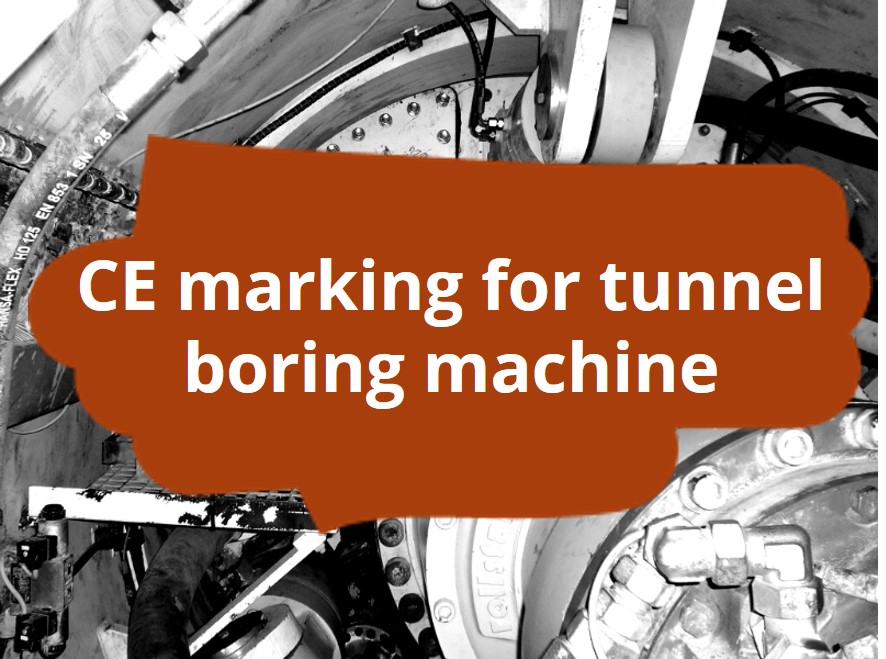
CE marking and conformity assessment of all life phases of a copper mining tunnel boring machine in Australia
easyCE supports the entire conformity assessment process including risk assessment up to the declaration of conformity ready for signature for all phases of the life cycle of a tunnelling machine for copper mining in Australia. The completely new concept of using multi-arm cutting heads required special attention during the process. In addition to the conventional regulations, special safety and technical requirements that apply in Australia were also taken into account.
RL & VO: MRL - 2006/30/EU, EMC - 2014/30/EU, Low voltage - 2014/35/EU, PED - 2014/68/EU, ATEX - 2014/34/EU
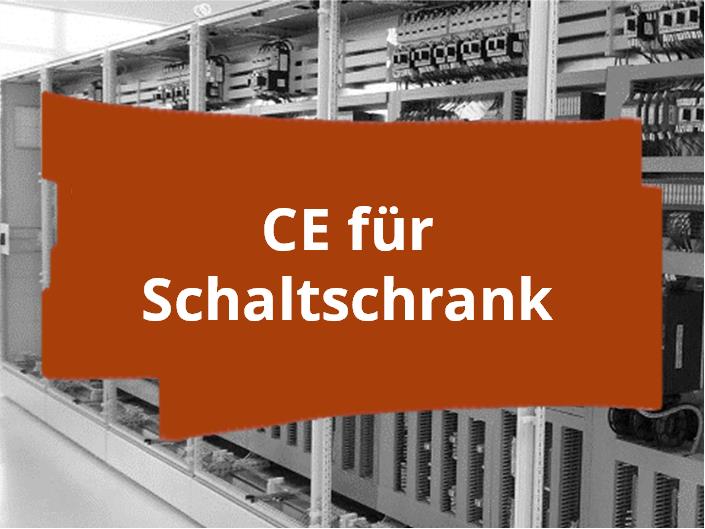
CE labelling of switch cabinets
easyCE supports the entire conformity assessment process, including risk assessment, right through to the declaration of conformity for control cabinets ready for signature. In particular, the requirements from the Machinery, EMC and Low Voltage Directives with regard to DIN EN 60204-1: 2019-06 and DIN EN IEC 61439-1: 2021-10 had to be observed. A checklist was also drawn up for the selection of components that must fulfil special requirements (supplier selection).

CE marking and declaration of conformity of a mobile satellite communication system
easyCE supports the entire conformity assessment procedure, including risk assessment in accordance with the EMC Directive, right up to the ready-to-sign declaration of conformity for a satellite communication system. The system ensures the redundant forwarding of TCP/IP data in order to send or receive it via two or more satellite antennas. The system is used wherever a mobile communication system needs to be set up quickly over long distances.
RL & VO: RED - 2014/53/EU, Low Voltage - 2014/35/EU, EMC - 2014/30/EU
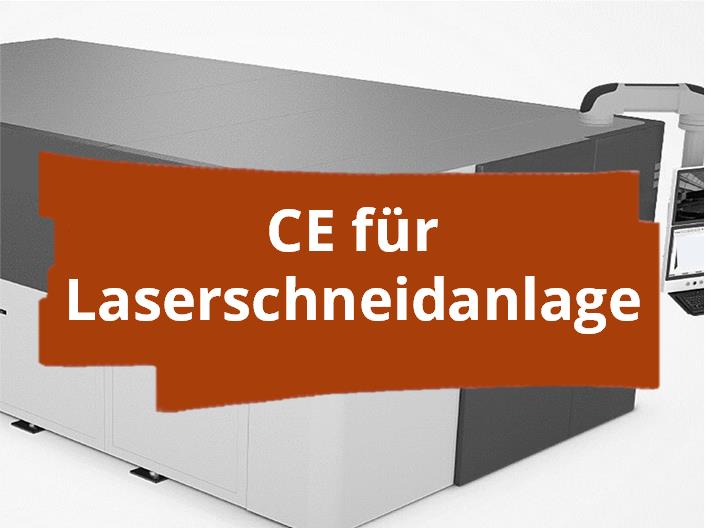
CE marking and declaration of conformity for a 2D laser cutting system
easyCE supports the entire conformity assessment procedure for a 2D laser cutting system with automatic pallet changer. The entire safety concept, including the 2-beam light barrier, was coordinated for the laser cutting system, the performance level was determined, a product analysis was created and a risk assessment was carried out in accordance with EN ISO 12100. Special requirements result for the mechanical components of the traverse for the laser cutting head, but especially for the kinematics of the pallet changer and laser cutting head. The cutting process (laser class 4) inside the cabin is safely shielded from the operator by laser protection screens, additional safety devices and the complete enclosure: laser class 1 outside the machine.
Takes into account among others: 2006/42/EC, 2014/30/EU, DIN EN 60825-1 etc.
See more of our project references and success stories
Get CE-marking done in 3 simple steps
Step 1
Request expert opinion
Ask for our expert opinion free of charge and find out what is necessary for the CE marking of your product. Be prepared to describe your product in broad terms.
Step 2
Receive our offer
If your product is subject to CE marking, we offer you our support with the CE marking and all accompanying measures. We will be happy to explain necessary steps on the phone.
Step 3
We get it done
When you place an order, you will be assigned your own personal CE expert who will carry out your CE marking and accompany you throughout the entire process. Your expert will also be at your side after the CE marking has been successfully completed.
Get CE-marking done, worry-free
Trust the experts of product safety and conformity

Willy Lebherz - Founder and Managing Director of easyCE
- Expert in product safety and conformity since 1995
- Recipient of the "Medal of the Order of Merit of the Federal Republic of Germany", awarded in 1983 by the then Federal President Carl Carstens
- Master of measurement and control technology
- Captain (ret.), Project Officer for Technical Logistics in the Army Material Office and Chief of the Telecommunications Repair Company
easyCE is a digital, dynamic engineering office with a focus on product safety and product conformity - especially CE-marking. We support manufacturers, operators and dealers in designing products safely and offering them on the market in compliance. We are a "full-service provider" and can take over the entire conformity assessment process for you if you wish. To do this, we support you in carrying out risk assessments, researching standards, product analyses, developing suitable safety precautions, preparing user-friendly technical documentation, coordinating tests and all other accompanying measures. easyCE was founded in southern Germany, but is now active globally.
We know what you need to do to get CE-marking done, worry-free.