The WEEE Directive correctly applied to CE marking.
You can affix the CE mark and sign the declaration of conformity without worries.
Willy Lebherz
Director & founder of easyCE GmbH

Declaration of conformity done!
Receive your CE declaration of conformity ready for signature.
Risk assessment completed!
CE mandatory risk analysis conducted.
Relevant directives & standards applied!
Your product evaluated against relevant directives and standards.
Technical documentation created!
Receive a pragmatic, user-friendly operating manual.
CE mark attached!
Simply affix the CE mark and you're done.
routines differ depending on your role CE marking
CE AS PRODUCER
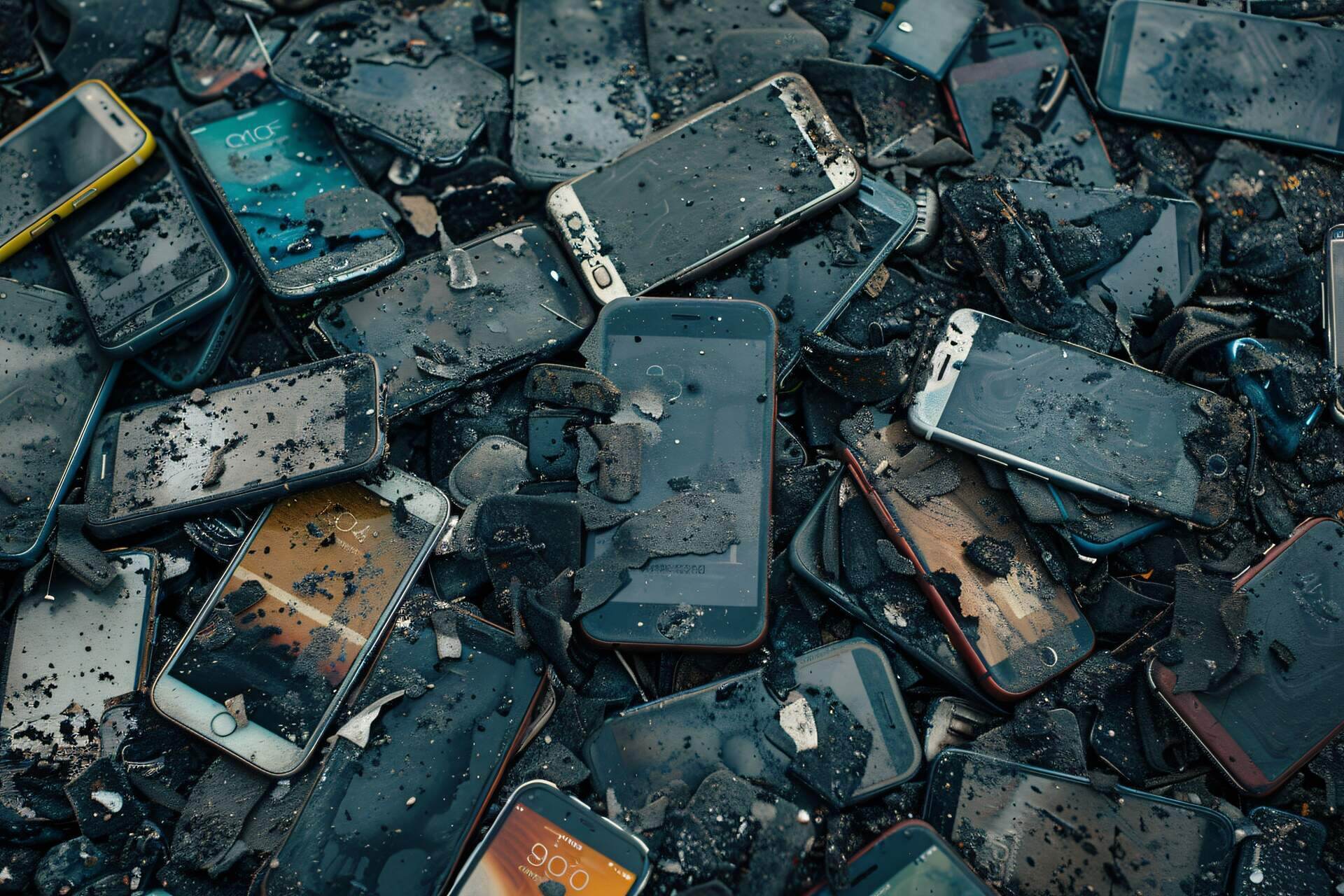
The 7m high "WEEE Man" sculpture in London is made from 3.3tons of electronic waste. The average amount of electronic waste a person leaves during their lifetime.
WEEE stands for Waste Electrical and Electronic Equipment. WEEE Directive 2012/19/EU is the European Community Directive on Waste Electrical and Electronic Equipment (WEEE), which, together with RoHS Directive 2002/95/EC, became European law in February 2003. It is a major step towards implementing the zero-waste concept by setting collection, recycling and recovery targets for all types of e-waste. The WEEE Directive covers 14 different categories of electrical and electronic equipment.
Certain types of electrical and electronic equipment are excluded from the requirements of the WEEE-RL. WEEE compliant products currently do not require CE marking unless otherwise required to have a CE marking For example, products that are classified as medical devices, products that contain hazardous substances according to RoHS, or products that fall under the Low Voltage Directive. Learn more about the application of the WEEE directive, the connection with other directives and the CE marking
The experts at easyCE will be happy to help you place your products on the market and assess special cases. We are happy to support you with CE, UKCA and other labelling.

FAQ
What is the WEEE Directive?
WEEE steht für Elektro- und Elektronikaltgeräte. The WEEE-Directive 2012/19/EU is the European Community Directive on Waste Electrical and Electronic Equipment (WEEE), which together with the RoHS-Directive 2002/95/EG became European
law in February 2003. It is a major step towards implementing the zero-waste concept by setting collection, recycling and recovery targets for all types of e-waste. It establishes a return management system for EEE (electrical and electronic equipment) and makes products reusable through responsible recycling. This Directive has been replaced by WEEE Directive 2012/19/EU (WEEE Recast), which entered into force on 13 August 2012. WEEE is currently mandatory for all applicable product classes.
Which products are covered by the WEEE Directive?
The WEEE Directive covers 14 different categories of electrical and electronic equipment. Based on various provisions of the WEEE Directive, electrical and electronic equipment can be divided into 14 categories for practical reasons:
- large household appliances
- small appliances
- IT and telecommunications equipment
- consumer devices
- lighting devices
- electrical and electronic tools (except large-scale stationary industrial tools)
- Toys, leisure and sports equipment
- medical devices (excluding implanted and infected products)
- monitoring and control instruments
- automatic dispensers
- display devices
- Appliances containing refrigerants
- Gas discharge lamps and light emitting diodes (LED) light sources
- PV panels (solar panels)
Manufacturers can select the most appropriate category for reporting WEEE compliance from the following 14 categories, depending on local legal requirements
What are the requirements for classifying products for the WEEE Directive?
Due to the heterogeneity of e-waste, there is no uniform classification rule for regulators. However, the WEEE Directive includes a number of product classifications relevant to the variety of functions involved. All applicants for compliance with the WEEE Directive must choose a product category within the four levels, taking into account their national legal and business considerations.
- Historical and non-historical: Historical electrical and electronic waste is equipment that was put on the market before 2005 and it is the responsibility of the owner of the equipment to take precautions for recycling.
- Equipment placed on the market after 2005 is referred to as non-historic WEEE and the responsibility for collection and recycling lies with the manufacturer/distributor.
What types of products are NOT affected by the WEEE Directive?
WEEE does not apply to certain types of electrical and electronic equipment, in particular
- material for military or space purposes,
- Light bulbs,
- active implantable medical devices,
- Means of transport or stationary industrial tools.
How does the WEEE Directive relate to the CE marking?
WEEE compliant products currently do not require CE marking unless otherwise required to have a CE marking. For example medical devices or devices covered by the Low Voltage Directive.
CE marking refers to product safety and related risks, while the WEEE directive obliges manufacturers and brand owners to follow the rules of extended producer responsibility, to encourage the collection and responsible recycling of electronic waste
WEEE and CE marking are regulated independently by different EU legislation. If WEEE does not apply to a product, the product can be marked with the CE mark without being WEEE compliant.
For example, "personal protective equipment" is subject to CE marking but not WEEE labelling, since no electronic parts are installed (normally).
What is the link between the Low Voltage Directive (2006/95/EC) and the WEEE Directive?
The relationship between The Low Voltage Directive and WEEE-Directive is that the product class overlaps which are regulated by the guidelines.
The Low Voltage Directive (LVD 2006/95/EC) harmonizes legislation within the European Union and covers electrical equipment designed for use in a voltage range between 50 and 1000 volts for alternating current (AC) or between 75 and 1500 volts for direct current (DC). These product classes are often also covered by the WEEE Directive, including:
- medical devices,
- electricity meters,
- consumers and household appliances and
- electrical plugs and sockets for domestic use
- ...and more
How are RoHS and WEEE related?
The relationship between RoHS- und WEEE-Directive is dangerous electronic waste. The WEEE Directive and the RoHS Directive (Restrictions on Hazardous Substances) have been harmonised
electronic waste regulated by WEEE contains hazardous chemical substances regulated by RoHS. In the European Waste Catalogue, all the findings have been compiled and include:
- Uninterruptible power supplies, lead-acid batteries
- Cathode ray tubes (TVs, computer monitors)
- Fluorescent tubes, backlighting of laptop screens, thin-film transistors
- Electrical/electronic devices containing polychlorinated biphenyls (PCBs)
- Refrigerators and freezers, due to chlorofluorocarbons (CFCs), an ozone-depleting substance. Since the revision of the regulations in 2012, all refrigerants have been classified as dangerous.
(*) An asterisk at the end of a code means that the waste is dangerous. For example, 20-01-35 is considered* dangerous and 20-01-35 is considered not dangerous.
What measures does the WEEE Directive require?
A main focus of the WEEE Directive is the principle of extended producer responsibility (EPR). EPR ensures an effective implementation of WEEE because product manufacturers know best about the design and manufacture of a product. Therefore, they have the most direct impact on how their products can be recycled. The transfer of responsibility also includes financial responsibility and thus enables reinvestment in recycling systems.
What does EPR or extended producer responsibility (Extended Producer Responsibility) mean?
The principle of Extended Producer Responsibility (EPR) states that "companies bringing products to market should be responsible for the entire life cycle of these products and packaging. By making them responsible, they have more incentives to produce less waste and recycle more.
What is the Manufacturer Compliance Scheme (PCS) of the WEEE Directive?
A Producer Compliance Scheme (PCS) is an organization whose members are involved in the production and sale of electrical and electronic equipment (EEE). National governments support EEE manufacturers in establishing PCS among themselves.
The PCS works to achieve full compliance with the individual WEEE requirements of all members by implementing and implementing the level of recycling required by the WEEE Directive. Furthermore, the PCS report on behalf of the members about the operation and the recycling successes to the authorities.
What do I have to implement to be compliant with the WEEE Directive and to comply with all requirements?
The implementation of the WEEE Directive generally entails that manufacturers or. Distributor who must meet extended manufacturer responsibility (EPR principle). However, the implementation requires a certain infrastructure for the collection and recycling of waste.
What is a withdrawal management infrastructure under the WEEE Directive and what does it consist of (HWRC, DCF, AATF)?
The withdrawal management infrastructure is designed to comply with the EPR principle and consists of several components. Infrastructure for delivery of waste to domestic waste recycling centres (HWRC)
or designated collection points (DCFs). Licensed recyclers then transport the collected electronic waste from these sites to recycling plants and approved treatment plants (AATFs). In AATFs, the materials in the e-waste stream are separated into clean raw materials by the process of shredding, sorting and separating. Waste electrical and electronic equipment is then weighed and categorised in accordance with the directive. The total quantities of each category of material processed are reported to the manufacturer compliance system and remunerated accordingly.
What is a WEEE certified recycler?
Certified recyclers play a central role in the recycling process. The Environmental Protection Agency (EPA) promotes the role of certified recyclers to ensure a responsible recycling process. All electronic recyclers are certified by demonstrating to an accredited and independent auditor that they meet certain standards for safe recycling.
How can I register as an EPR?
Officially, the WEEE Directive is not a CE marking directive. However, it applies to products that must meet CE requirements.There are many overlaps with RoHS RL and low voltage RL
(which require CE marking). WEEE compliant products that must meet CE requirements require an EPR certificate, which must be requested from the competent authorities. This certificate requires documentary proof of the creation of an e-waste management plan by a certified recycling agency. The plan must ensure that the targets set by the regulatory authorities for the collection of electronic waste are met. easyCE can provide you with a sample for an EPR certificate on request.
What do I need to prove to register and receive an ERP certificate?
In order to comply with the directive, a manufacturer must register for the EPR certificate by fulfilling the following points.
- Registration; I have to register as a manufacturer with the respective EU authority.
- Regular declaration of the material placed on the market
- Labelling requirements: Products must be WEEE marked.
- The necessary information must be provided to the recycling company.
- Return and recycling must be organized
- Take-back and recycling financing: manufacturers must finance the take-back systems, waste treatment and recycling.
- Reporting on withdrawal and recovery results; manufacturers must report regularly to the legal authorities on the quantities they collect and treat.
The format of the EPR certificate varies from country to country and from one compliance redemption system to another.
How does the regular declaration of the material placed on the market work?
Manufacturers must declare their actual quantities and weights placed on the EU market to the regulatory authority. This data is carefully stored and analyzed to calculate the collection and recycling targets to be achieved globally for the member states and individually per manufacturer.
What are the labelling requirements of the WEEE Directive?
Products must have a special symbol for the marking of electrical and electronic equipment: the crossed-out garbage can. A WEEE symbol on a product informs customers that the product with this label must not be disposed of in a landfill or with household waste. Instead, customers can claim the return by refunding the manufacturer.
What information must be provided to the recycling company?
Manufacturers of electrical and electronic equipment must provide disassembly instructions and recommendations for easy disassembly, removal of pollutants and recycling of electrical and electronic waste.
How must return and recycling be organized?
Manufacturers must be able to offer end users return logistics. They must therefore implement a withdrawal management infrastructure.
What does the WEEE symbol look like and what does it mean?
The WEEE symbol is a crossed-out garbage can. The black line below indicates that the goods were placed on the market after 2005, when the directive entered into force. Goods without the black line were produced between 2002 and 2005.
What is the purpose of the WEEE Directive?
The WEEE Directive pursues the goal of a zero-waste system. At present, our production system is on a linear path from extracting raw materials from the earth to careless production and irresponsible disposal.
However, this approach carries the risks of increasing the threat to humanity through resource scarcity and deterioration in health. Governments around the globe are increasingly under pressure to change the systems around us to avoid waste and protect our environment, health and natural resources. This has led to the idea of the Zero Waste System, which could meet the needs of future generations. A zero waste system is a cyclical production model, just like nature, and follows the following approach:
- A new set of rules for responsible management of diminishing natural resources
- Intelligent design and manufacturing processes where manufacturers are responsible for the entire life cycle of their products
- New policies, programs and regulations to raise awareness and regulate systems that change our culture away from waste and towards a sense of responsibility for our planet and its future
- Build a resource recovery infrastructure to recover most of our waste through responsible recycling.
Hundreds of companies trust easyCE














With easyCE, product compliance is really 'easy'
Approach to CE marking
Type and manner of support
Scope of support
Contact during project processing

 Find the easiest way to obtain the CE mark
Abbreviated process for CE derived directly from CE
All-inclusive or modular – whatever you prefer
Personal contact with experts who take your wishes into account
other CE service providers
 Often lacking in sound judgement and unnecessarily complicated
Mostly flexible but often bureaucratic
Mostly flexible in terms of support scope
Mostly personal contact
CE Software
Follows standardised process; special circumstances not taken into account
Double burden for you: software management + no support during processing
Only according to software scope and purchased modules
No contact
You want support that lightens your workload and doesn't create more work.

Reference Projects
CE marking of laboratory machines developed in-house
In the course of an upcoming ISO 45001 occupational health and safety audit, easyCE supported a laboratory technology manufacturer in ensuring CE conformity for its internally used validation machines for medical equipment. Our specialists conducted a comprehensive assessment of occupational health and safety aspects and integrated these into the CE documentation. Particular attention was paid to safe operation by laboratory staff and the documentation of risk assessments that meet both CE and ISO 45001 requirements.
Takes into account, among others: 2006/42/EU, 2014/35/EU, 2014/30/EU, 2011/65/EU EN ISO 12100, EN 60204-1
CE marking for a laboratory robot
In the course of an upcoming ISO 45001 occupational health and safety audit, easyCE supported a medical technology manufacturer in achieving CE conformity for its coagulation robot—a specialized laboratory machine for the automated performance of coagulation cycles for testing purposes. Our specialists conducted a comprehensive assessment of occupational health and safety aspects and integrated these into the CE documentation. Particular attention was paid to the safe handling of electrosurgical components and the documentation of risk assessments that meet both CE and ISO 45001 requirements.
Takes into account, among others: 2006/42/EU, 2014/35/EU, 2014/30/EU, 2011/65/EU, EN ISO 12100, EN 60204-1, etc.
CE marking and consulting for laboratory equipment
In the context of an upcoming ISO 45001 certification, easyCE supported a medical technology manufacturer with the CE documentation for a specialized testing and calibration machine for insufflators in the laboratory sector. Our specialists developed integrated documentation that covers both the CE requirements and the occupational health and safety aspects according to ISO 45001. Particular attention was paid to the safety requirements for handling various hose systems and connections, which can vary depending on the insufflator model.
Takes into account, among others: 2006/42/EU, 2014/35/EU, 2014/30/EU, 2011/65/EU, EN ISO 12100, EN 60204-1 etc.
CE marking for electrical equipment in medical laboratories
As part of the ISO 45001 certification preparation process, easyCE supported a manufacturer of electrical laboratory equipment in the correct classification and CE conformity of its products. Our experts carried out a precise analysis to distinguish between medical devices and electrical equipment in order to ensure correct classification in terms of occupational health and safety. This clarity was crucial for the ISO 45001 requirements regarding hazard identification and risk assessment in the workplace. Successful documentation and conformity assessment enabled the customer to operate its laboratory equipment in full compliance with occupational health and safety guidelines and to pass the ISO audit without any objections.
Takes into account, among others: EN 55032, EN 55035, EN 60335-1 etc.
CE marking for test station for low-pressure units
In the run-up to an ISO 45001 occupational health and safety audit, easyCE supported an industrial company in compiling CE documentation for an internal test bench for low-pressure units in accordance with occupational health and safety regulations. Our experts first analyzed the regulatory classification of the test bench and were able to prove through precise measurements that the Pressure Equipment Directive was not applicable. This clarification was crucial for the correct risk assessment within the framework of the ISO 45001 management system. The CE documentation subsequently created took particular account of occupational health and safety aspects such as operational safety and emergency procedures. This enabled the customer not only to demonstrate CE conformity, but also to pass its ISO 45001 certification without any deviations in the area of work equipment.
Takes into account, among others: 2006/42/EG, EN ISO 12100, EN 60204-1, EN ISO 4414, EN ISO 13849-1 etc.
Learn more about our project references and success stories
Get CE-marking done in 3 simple steps
Step 1
Request expert opinion
Ask for our expert opinion free of charge and find out what is necessary for the CE marking of your product. Be prepared to describe your product in broad terms.
Step 2
Receive our offer
If your product is subject to CE marking, we offer you our support with the CE marking and all accompanying measures. We will be happy to explain necessary steps on the phone.
Step 3
We get it done
When you place an order, you will be assigned your own personal CE expert who will carry out your CE marking and accompany you throughout the entire process. Your expert will also be at your side after the CE marking has been successfully completed.
Get CE-marking done, worry-free
Trust the experts of product safety and conformity

Willy Lebherz - Founder and Managing Director of easyCE
- Expert in product safety and conformity since 1995
- Recipient of the "Medal of the Order of Merit of the Federal Republic of Germany", awarded in 1983 by the then Federal President Carl Carstens
- Master of measurement and control technology
- Captain (ret.), Project Officer for Technical Logistics in the Army Material Office and Chief of the Telecommunications Repair Company
easyCE is a digital, dynamic engineering office with a focus on product safety and product conformity - especially CE-marking. We support manufacturers, operators and dealers in designing products safely and offering them on the market in compliance. We are a "full-service provider" and can take over the entire conformity assessment process for you if you wish. To do this, we support you in carrying out risk assessments, researching standards, product analyses, developing suitable safety precautions, preparing user-friendly technical documentation, coordinating tests and all other accompanying measures. easyCE was founded in southern Germany, but is now active globally.
We know what you need to do to get CE-marking done, worry-free.